
Uganda Wildlife
What You Can See in Uganda
Before you book, know what's actually there, and when. Most trips fail to see everything simply because of bad timing, not bad luck.
Aardwolf
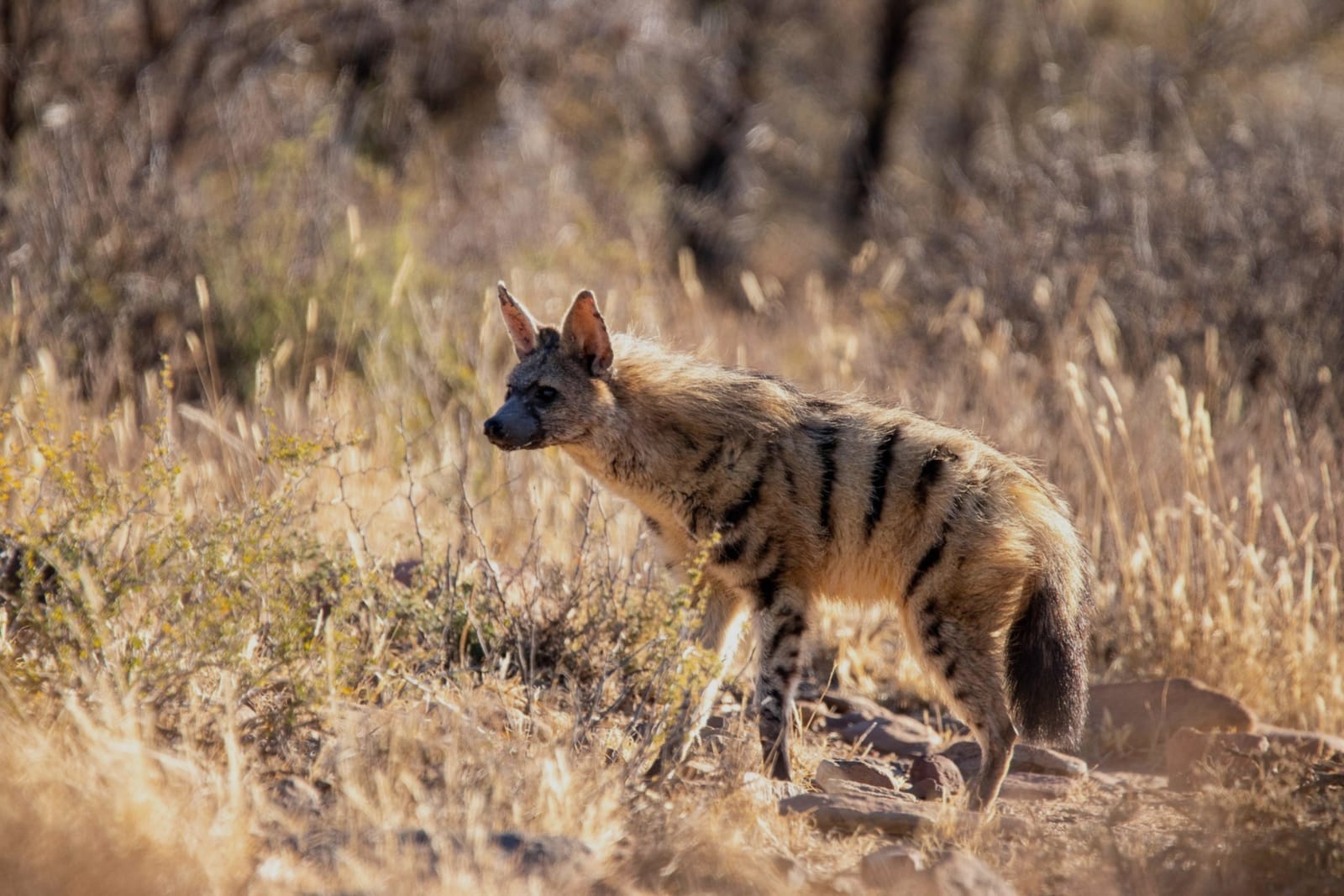
The aardwolf is a small, highly elusive insectivorous mammal belonging to the hyena family, instantly distinguished by its yellowish-white coat marked with vertical black stripes and a long, shaggy dark mane running along its spine. Unlike its larger, bone-crushing relatives, the aardwolf has evolved specialized, flattened cheek teeth and a long, sticky tongue designed exclusively for consuming up to 300,000 harvester termites in a single night. Because it does not dig its own burrows, this nocturnal creature repurposes abandoned holes left by aardvarks or porcupines, emerging under the cover of total darkness to forage across open plains while living in stable, monogamous pairs.
African Bush Elephant
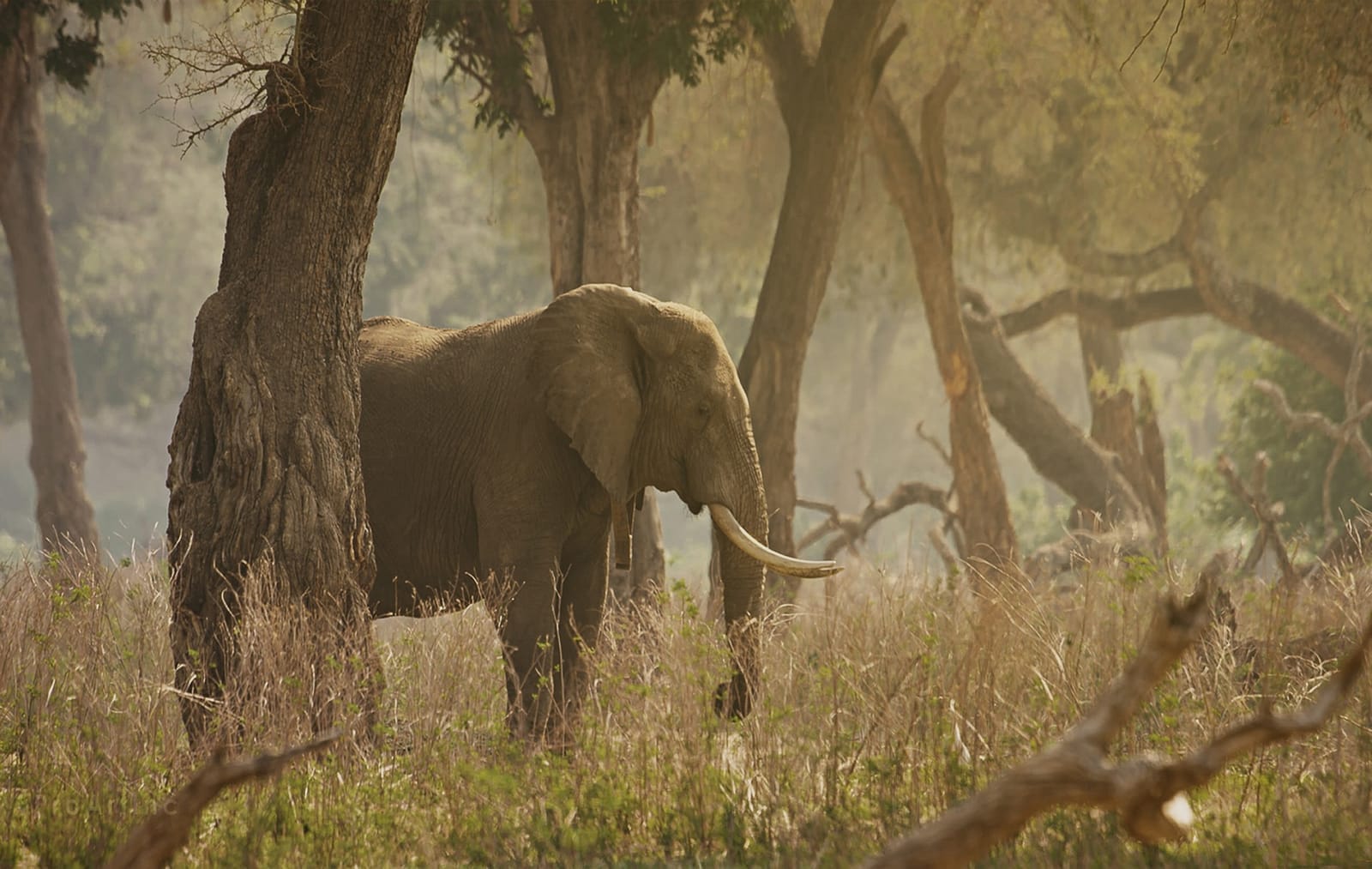
The African bush elephant is the largest living land mammal on Earth, distinguished by its immense stature, large fan-like ears, and heavy ivory tusks. Operating within complex, deeply matriarchal societies, these highly intelligent giants navigate Uganda's diverse landscapes in tight-knit family herds led by an experienced older female. Equipped with a remarkably versatile trunk containing over 100,000 individual muscles, they function as natural ecosystem engineers: clearing dense woodlands, digging dry riverbeds for hidden water, and dispersing seeds across vast distances. It is incredibly humbling and scary at the same time to be close to them.
African Cape Buffalo
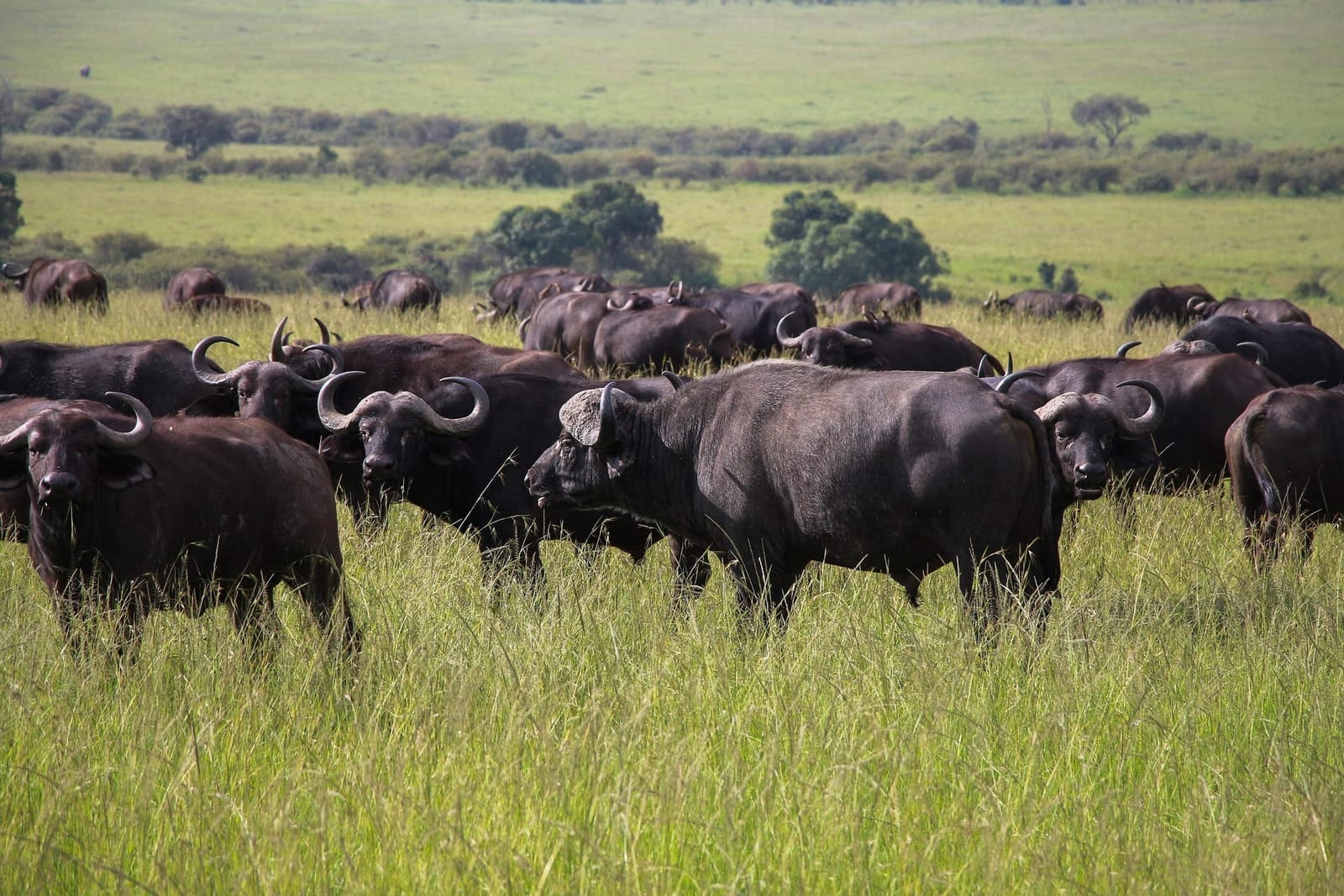
The African Cape buffalo is one of the continent’s most formidable and legally protected large herbivores, recognized by its robust, barrel-shaped body and massive, fused horn base known as a "boss." Operating in highly protective herds that can number in the hundreds, these bovines possess a fierce temperament when threatened or injured, earning them a respected place among the traditional "Big Five." Buffaloes are bulk grazers within Uganda's savannahs, using their wide muzzles to mow down tall, coarse grasses, which paves the way for selective grazers like antelopes.
Bat-eared Fox
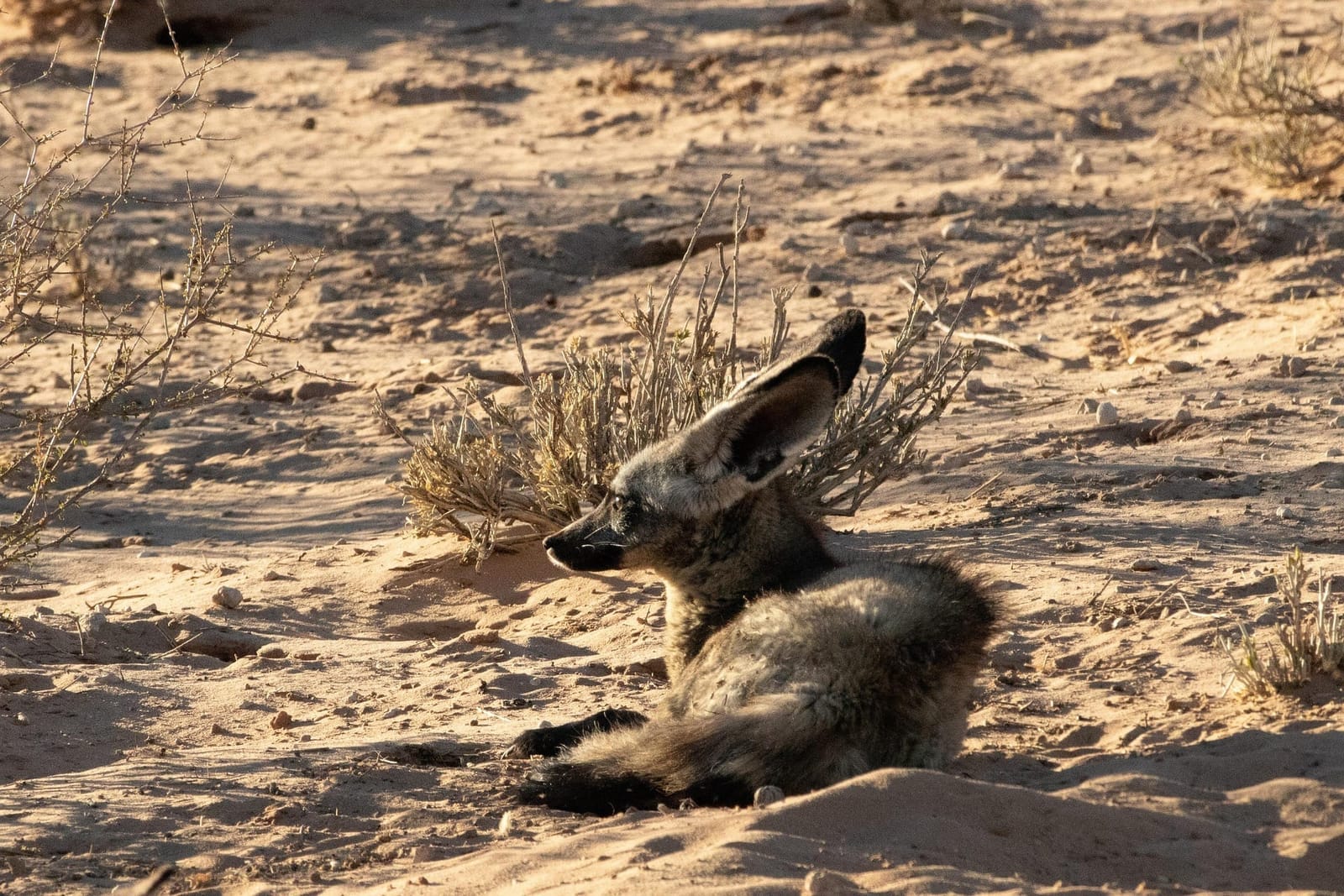
The bat-eared fox is a small, highly specialized canid instantly recognized by its extraordinary, oversized ears that measure up to five inches long. Sporting an ashy-grey coat, black limbs, and a distinct raccoon-like facial mask, this unique mammal has largely abandoned hunting vertebrates in favor of an insectivorous diet consisting mostly of harvester termites. It relies on its incredible acoustic hearing to detect the faint chewing sounds of insects moving completely underground. Armed with up to 50 specialized teeth, more than almost any other non-marsupial mammal, the bat-eared fox plays a vital ecological role in controlling local insect populations while living in tight-knit, monogamous family groups.
Burchell's Zebra
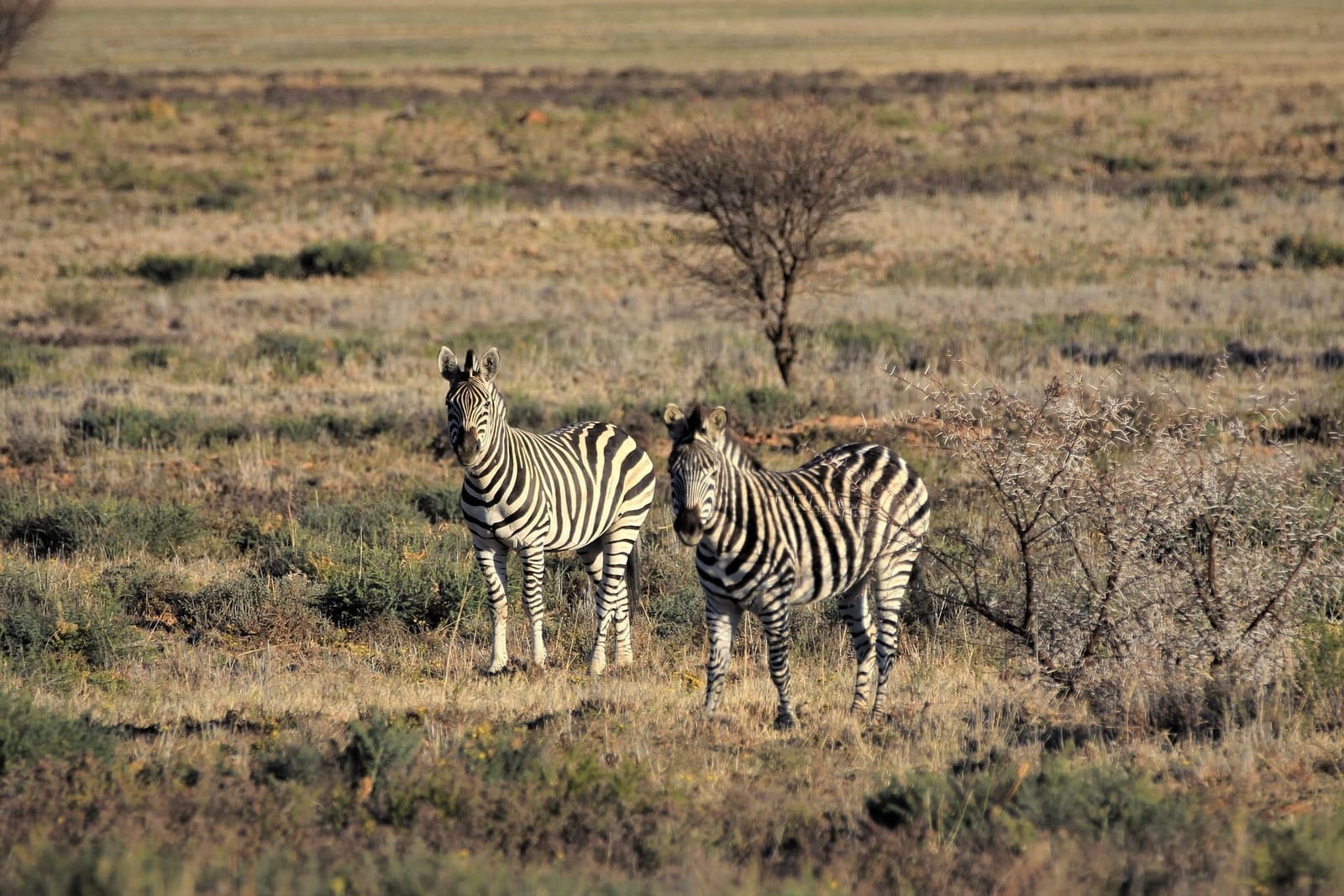
The Burchell's zebra is a striking, single-hoofed herbivore celebrated for its coat of black-and-white striped patterns that vary per individual like a human fingerprint. Built with a short vertical mane and a barrel-shaped body, this social equid operates within tight-knit family units called harems, comprising a single dominant stallion, multiple mares, and their dependent offspring. As a specialized bulk grazer utilizing efficient hindgut fermentation, it targets coarse, short grass stems that other selective herbivores bypass.
Caracal
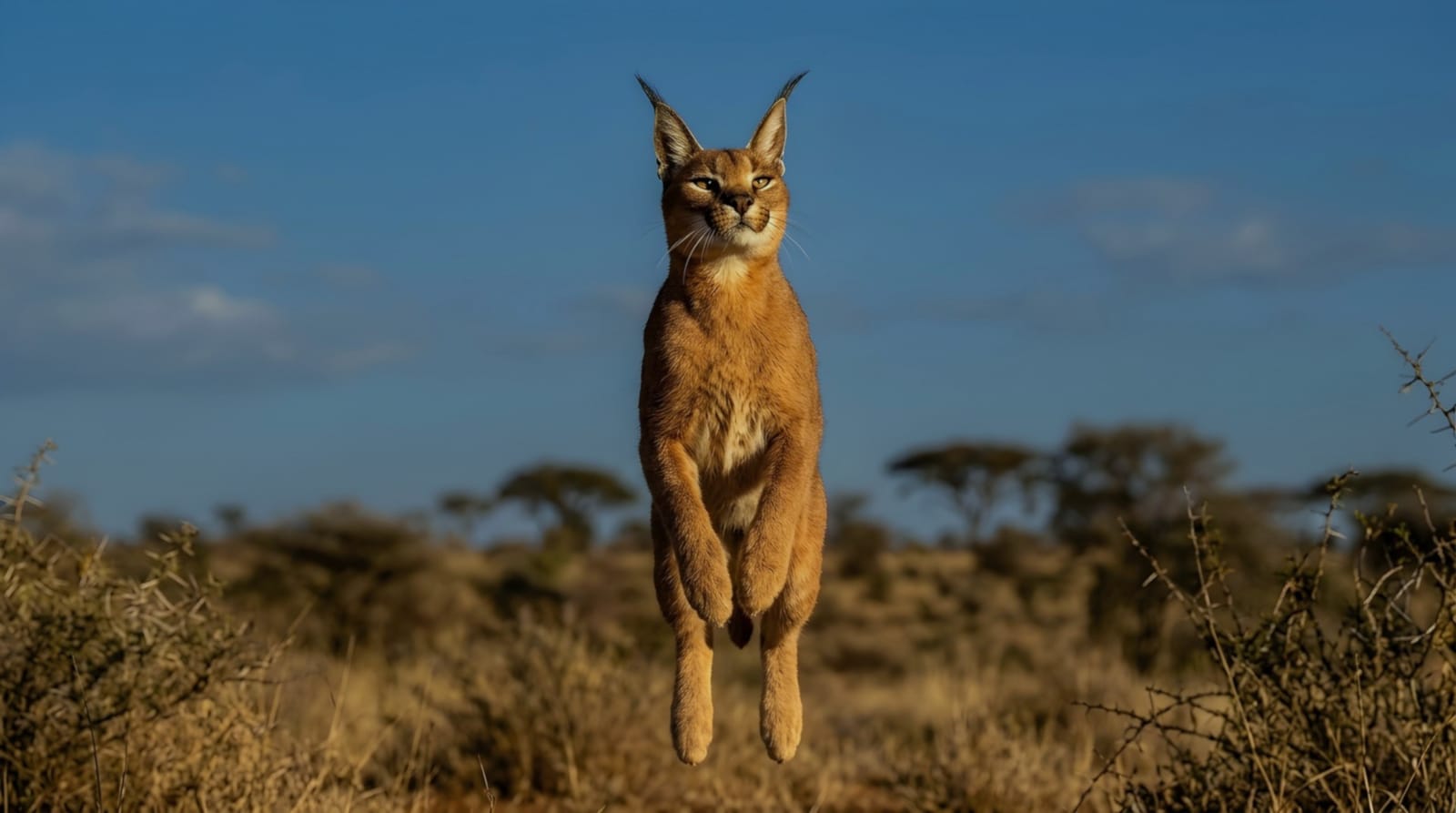
The caracal is a powerful, slender medium-sized wildcat renowned for its sleek, tawny-reddish-gold coat and its most defining feature: large, pointed ears tipped with long, dramatic tufts of black hair. Supremely adapted for survival in harsh conditions, this highly secretive predator possesses exceptionally robust hind limbs that allow it to leap up to 10 feet straight into the air to snatch flying birds right out of the sky. Caracals are fiercely solitary and predominantly nocturnal, utilizing more than 20 individual muscles to swivel their large ears like satellite dishes to pinpoint the rustling of rodents, birds, and small antelopes moving in the scrub.
Cheetah
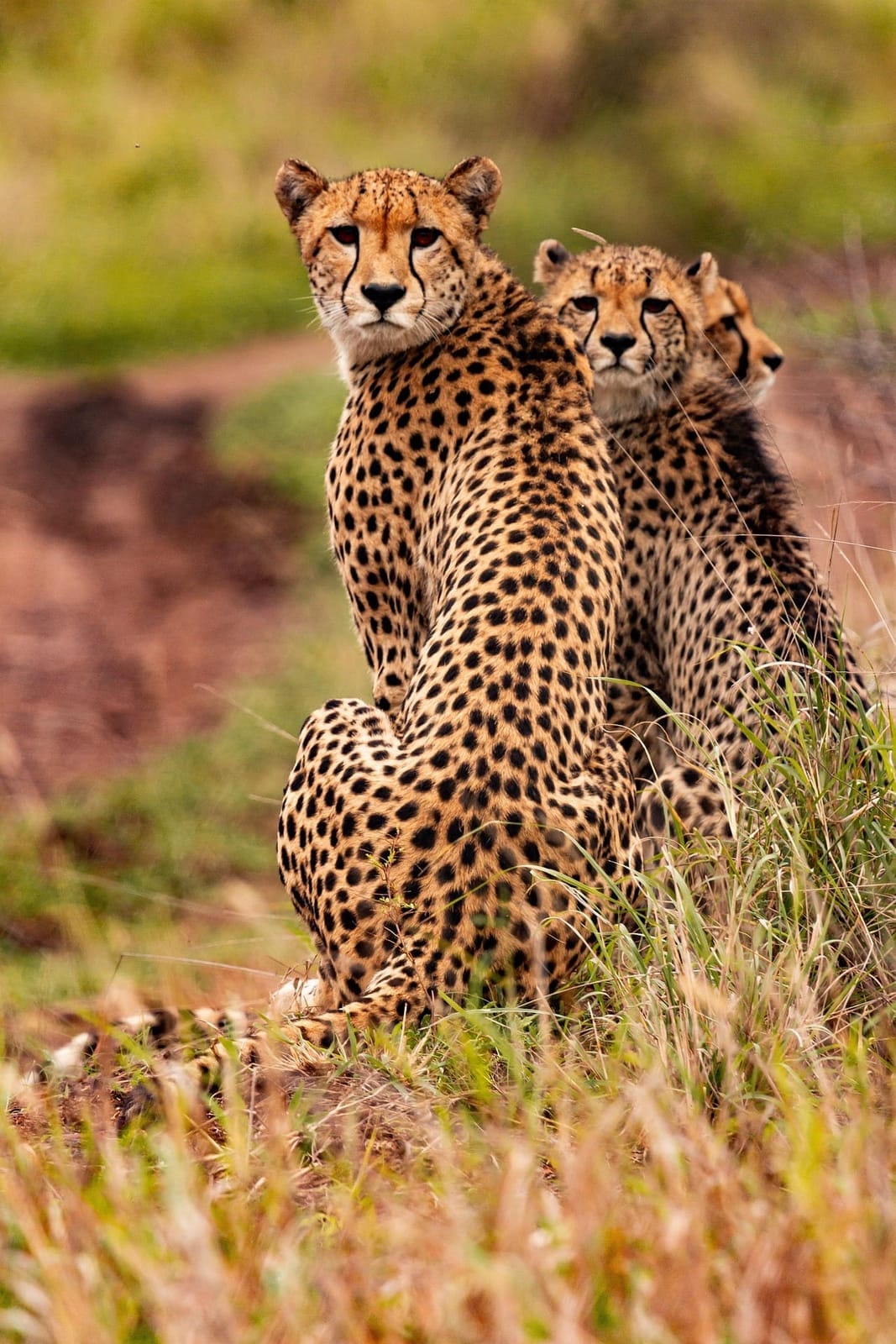
The cheetah is the undisputed fastest land animal on Earth, instantly distinguished by its sleek, greyhound-like build, prominent black facial "tear marks", and a golden coat densely covered in solid black spots. Built entirely for high-speed pursuit, it features a highly flexible spine, semi-retractable claws that act like running cleats, and a long, muscular tail used as a rudder for mid-air balancing. Unlike most big cats, cheetahs are strictly diurnal hunters, relying on the wide-open, unobstructed light of dawn and dusk to stalk and run down small-to-medium antelopes on the flat plains. Facing intense pressure from larger apex predators, they rely on exceptional camouflage and flat-out acceleration to survive in remote grasslands.
Common Ostrich
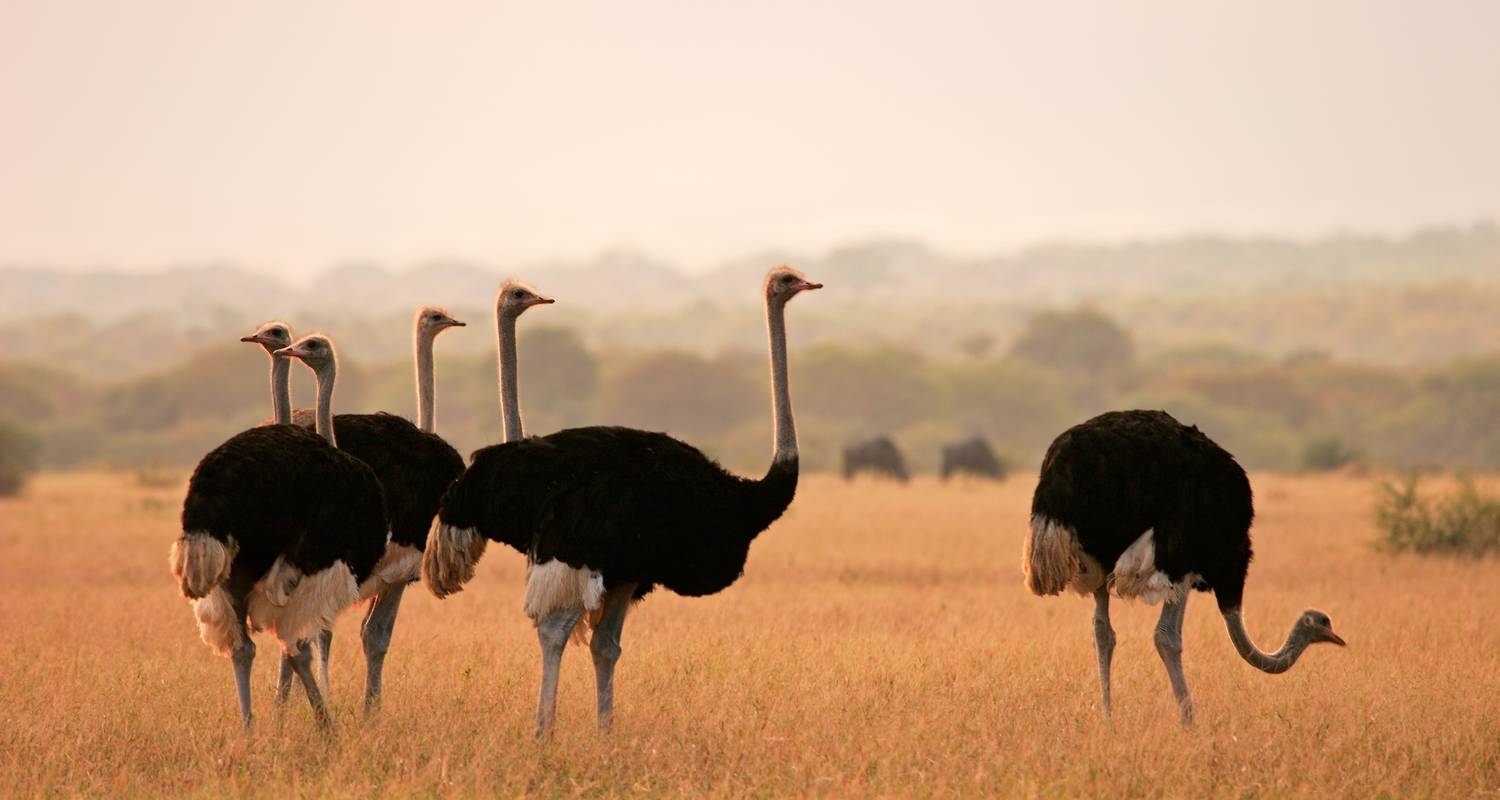
The common ostrich is the largest living bird on Earth, a flightless giant recognized by its incredible size, long bare neck, and powerful legs built for speed. Reaching heights of up to nine feet, these birds possess the ability to sprint at speeds of up to 43 miles per hour, making them the fastest creatures on two legs. Operating within a social structure led by a dominant alpha cock and major hens, ostriches lay massive, armored communal eggs that can withstand the extreme weight of an incubating adult. They are capable of delivering a lethal kick to oncoming predators with their sharp, two-toed feet.
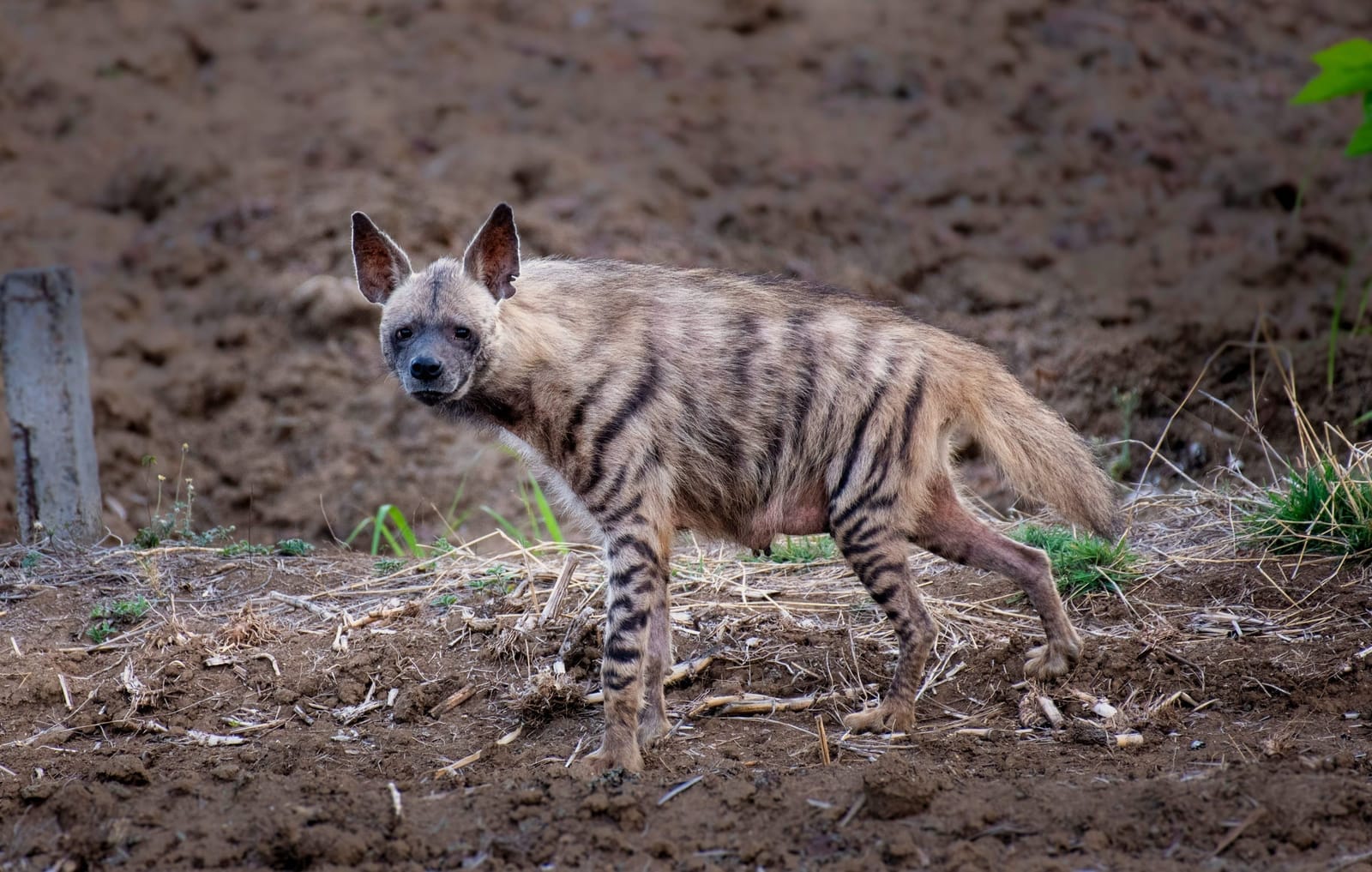
Striped Hyena
The striped hyena is a rare, solitary carnivore instantly distinguished by its pale grey-yellow coat lined with vertical black stripes and large, pointed ears. Considerably smaller and shyer than the familiar spotted hyena, it possesses a shaggy mane along its sloped spine that fully erects when threatened, to instantly double its apparent size. Operating as a strictly nocturnal ecosystem cleaner, this scavenger relies on immensely powerful, bone-crushing jaws to extract nutrient-dense marrow from historical carcasses left behind by apex predators. Unlike social clan-based hyenas, the striped hyena leads a peaceful, monogamous family lifestyle within rugged, isolated arid dens.
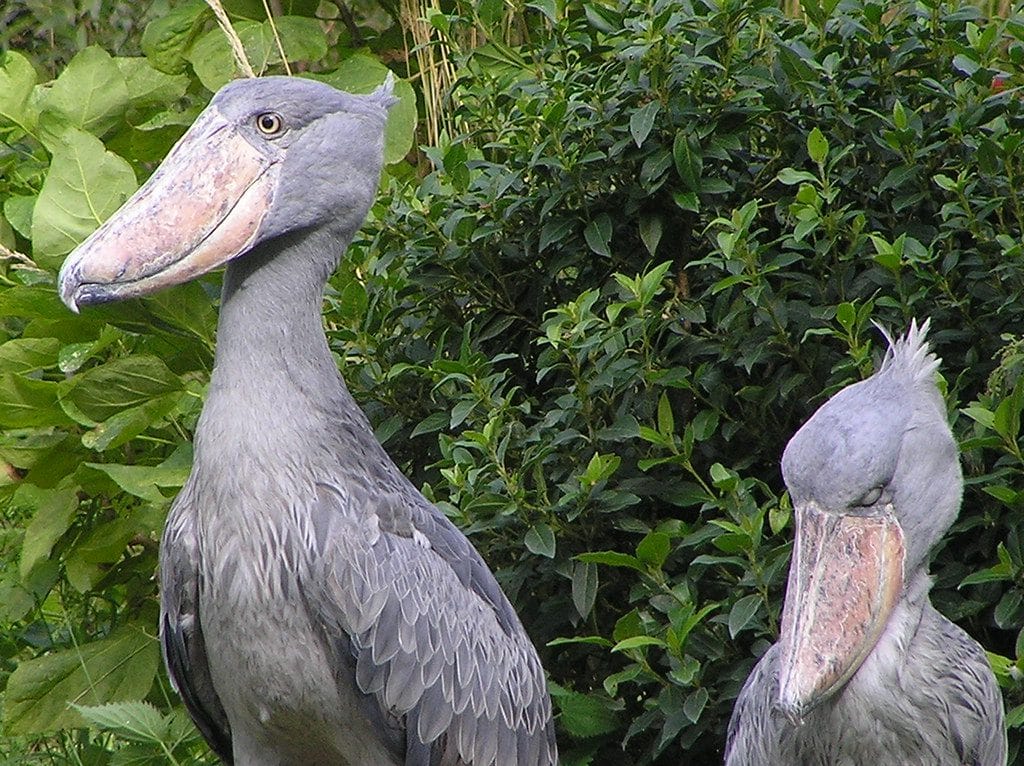
Shoebill Stork
The shoebill stork is an ancient avian giant widely sought after by birding enthusiasts for its striking, prehistoric appearance reminiscent of the Jurassic era. Standing up to five feet tall with an eight-foot wingspan, this bird is defined by its massive, bulbous, shoe-shaped bill tipped with a razor-sharp hook. Its formidable bill easily decapitates its preferred prey of large lungfish, along with water snakes, frogs, and even juvenile crocodiles.
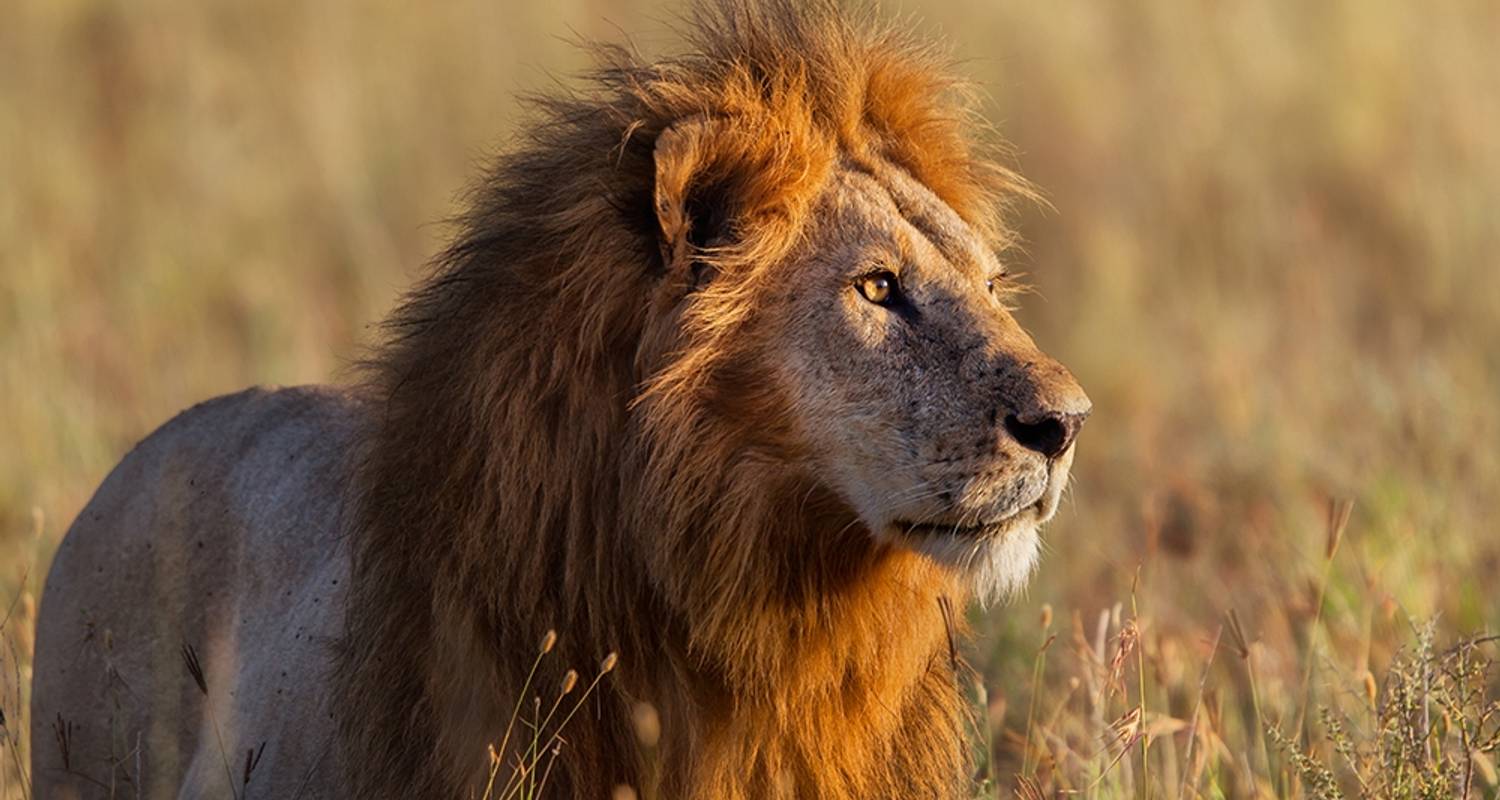
African Lion
The African lion is the undisputed apex predator of the Ugandan savannah, celebrated for its muscular build, immense hunting prowess, and complex, cooperative social structures called prides. Dominated by coalitions of heavy-maned males that guard vast territories, a pride relies on the coordinated teamwork of its lionesses to bring down large prey like Cape buffaloes, kobs, and zebras. Uganda's lions possess behavioral adaptations that vary drastically by region, including world-famous populations that have mastered the art of climbing high into the branches of ancient trees. Their roaring through the dark is the ultimate sensory symbol of the wild Ugandan wilderness.
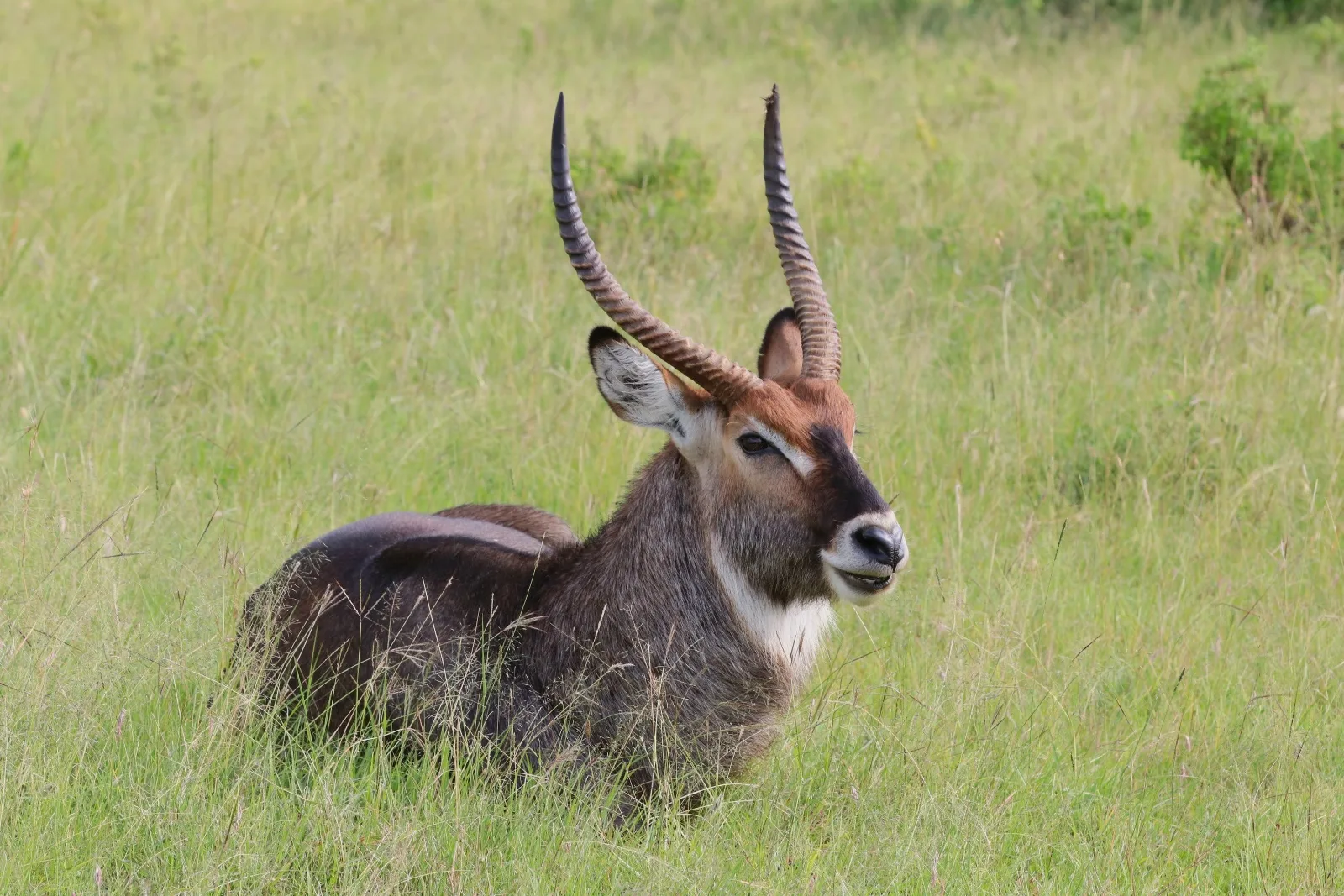
Defassa Waterbuck
This large, sedentary antelope possesses a coarse, grizzled red-brown coat coated in an oily, musky secretion that acts as a water repellent and predator deterrent. Only males carry the long, heavily ridged, forward-curving horns. Highly dependent on water, they graze on protein-rich grasses and readily plunge into rivers to elude predators like lions and leopards. Defassa waterbuck stay close to water almost without exception, and can be found at Murchison Falls National Park, Queen Elizabeth National Park, and Lake Mburo National Park. A shaggy, reddish-brown coat and a distinctive white ring around the rump make them easy to identify at a distance. The musky secretion produced by their skin deters most predators from eating them even after a successful kill.
Impala
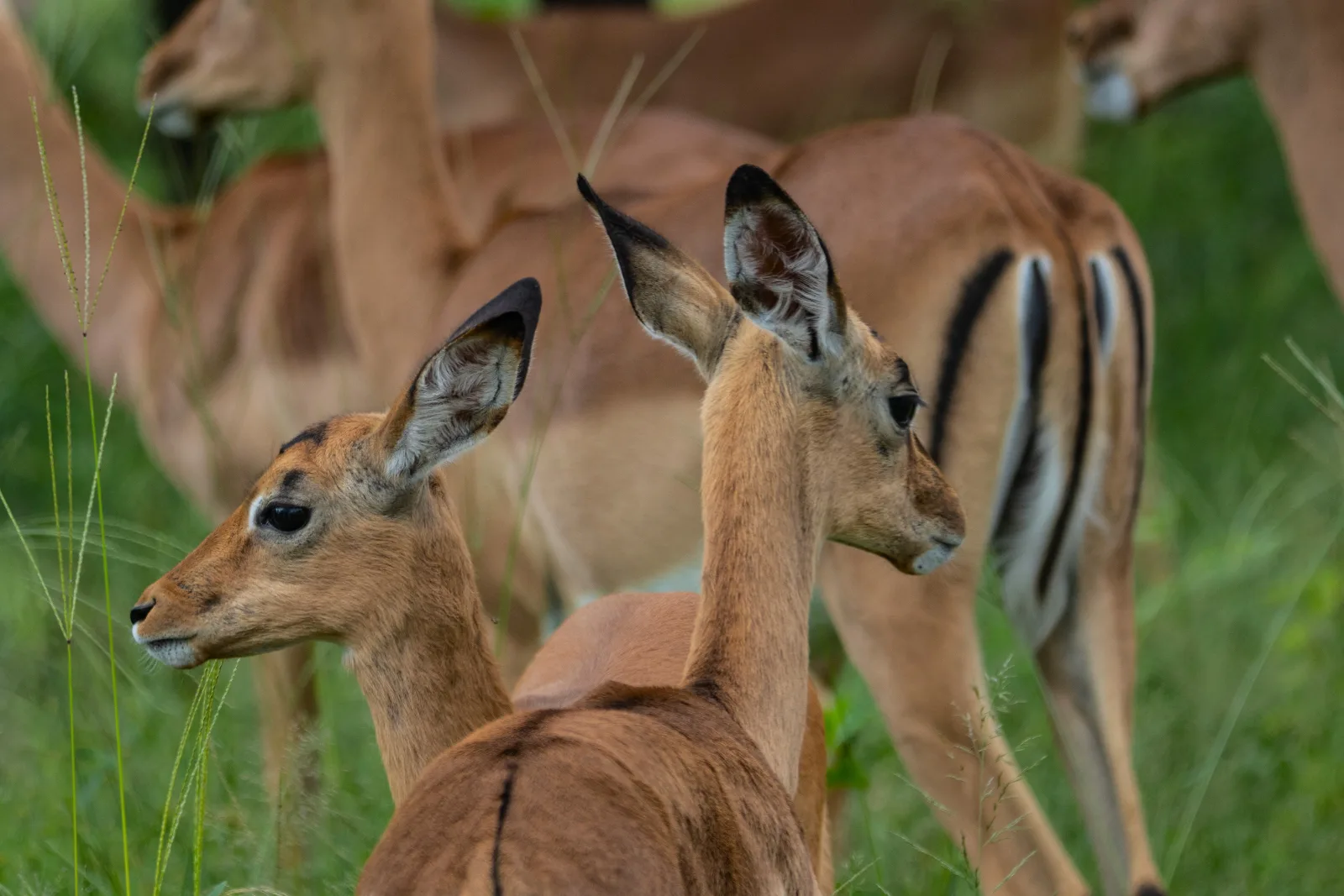
Sporting a two-toned reddish-brown coat with a stark white underbelly, the impala features diagnostic black markings along its tail, ear tips, and thighs. Mature males bear lyre-shaped horns measuring up to 90 centimeters, while females remain completely hornless. When alarmed, an entire herd can explode into a series of high, scattered leaps meant to confuse a predator about which animal to chase. They possess the capacity to leap up to 3 meters high and 10 meters long to evade predators. Kampala, Uganda's capital, derives its name from these animals; British colonial administrators referred to the surrounding terrain as the "Hill of the Impala" (Akasozi k'Empeewo in Luganda).
Common Eland
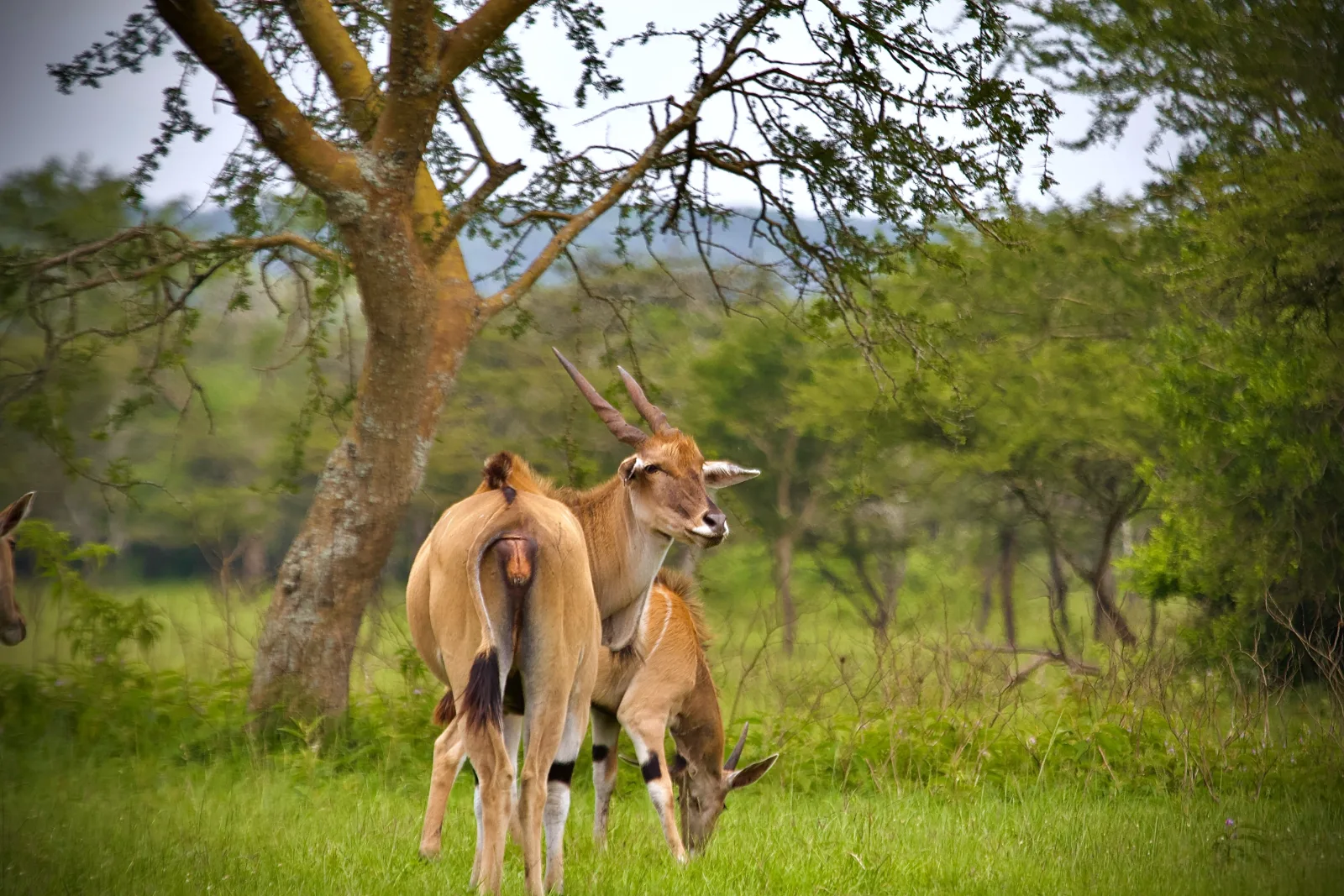
This antelope features a sandy-brown coat that darkens to a bluish-grey with age, often adorned with faint vertical white stripes on its flanks. Both sexes carry tightly spiraled, V-shaped horns, though the bull's grow noticeably thicker with age; males develop a prominent pendulous dewlap on their throats and a thick tuft of dark hair on their foreheads. Despite weighing up to 900 kilograms, elands are strong jumpers, capable of clearing an eight-foot fence from a standing position. The eland is Africa's largest antelope.
Leopard
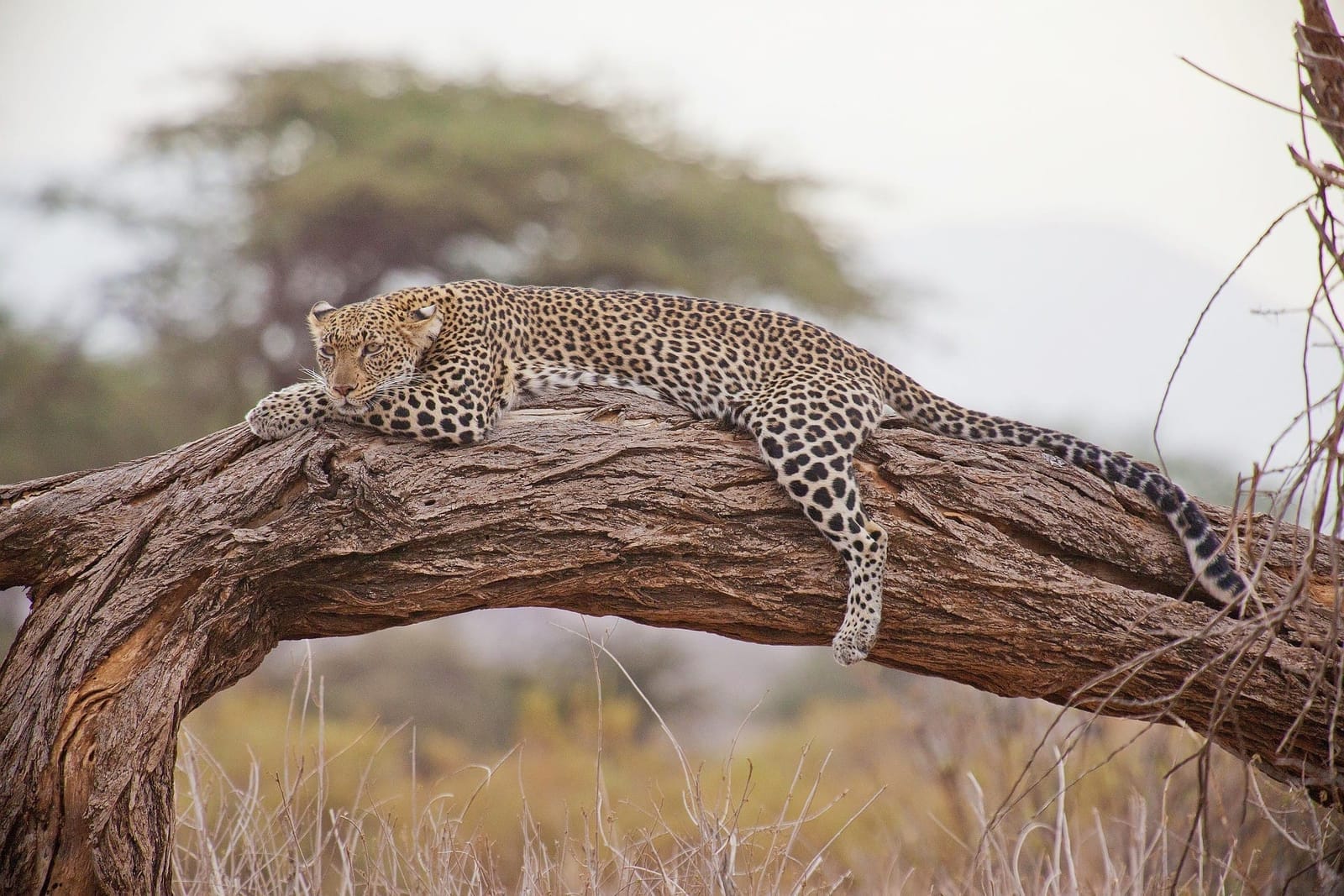
The leopard is the most elusive and secretive of [Uganda](/uganda/)'s large felids, celebrated for its rosette-patterned coat, immense physical strength, and masterfully stealthy hunting tactics. As an incredibly adaptable apex predator, this solitary big cat thrives across a diverse range of Ugandan ecosystems. Leopards are famously known for their climbing ability, often hoisting heavy prey carcasses high into the branches of acacia or sausage trees to protect their meal from competing scavengers like hyenas and lions. Spotting one of these nocturnal predators resting on a thick branch or camouflaged in the golden thorn bushes is a true prize on any Ugandan game drive.
Mountain Gorilla
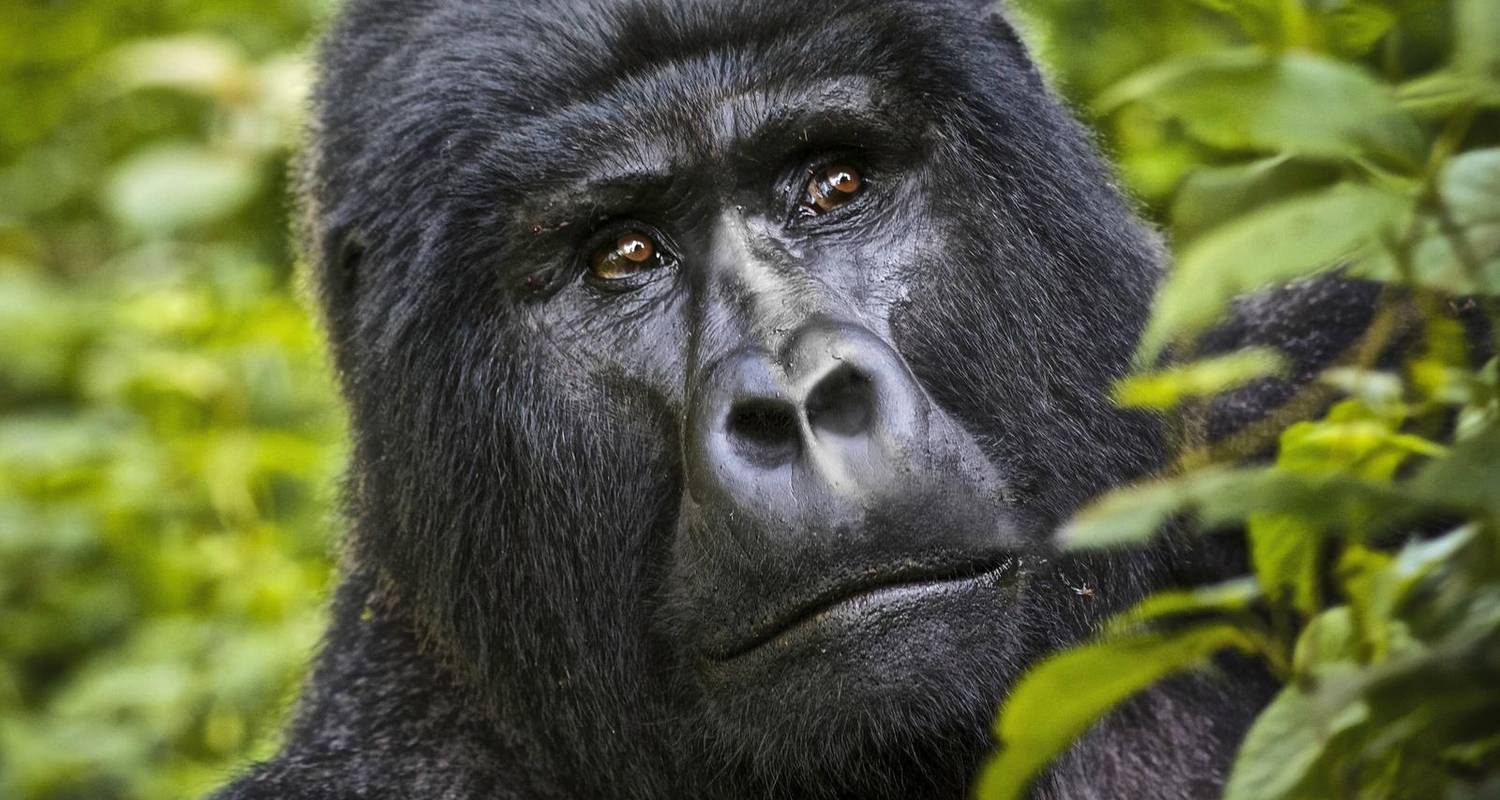
The mountain gorilla is a highly endangered subspecies of the eastern gorilla, distinguished by its exceptionally thick fur adapted for life at freezing high-altitude mountain elevations. [Uganda](/uganda/) is privileged to shelter roughly half of the world's remaining wild population, with these giants living within highly social, tightly knit families led by a dominant, protective silverback male. Their habituated family units reveal incredibly tender, human-like family dynamics, from playful juveniles wrestling in the dense foliage to mothers nursing infants under the watchful eye of the silverback. [Trekking](/activities/gorilla-trekking/) through the rugged, mist-shrouded volcanic ridges of Southwestern Uganda to spend an hour in their silent presence stands as the ultimate bucket-list highlight of any luxury African safari.
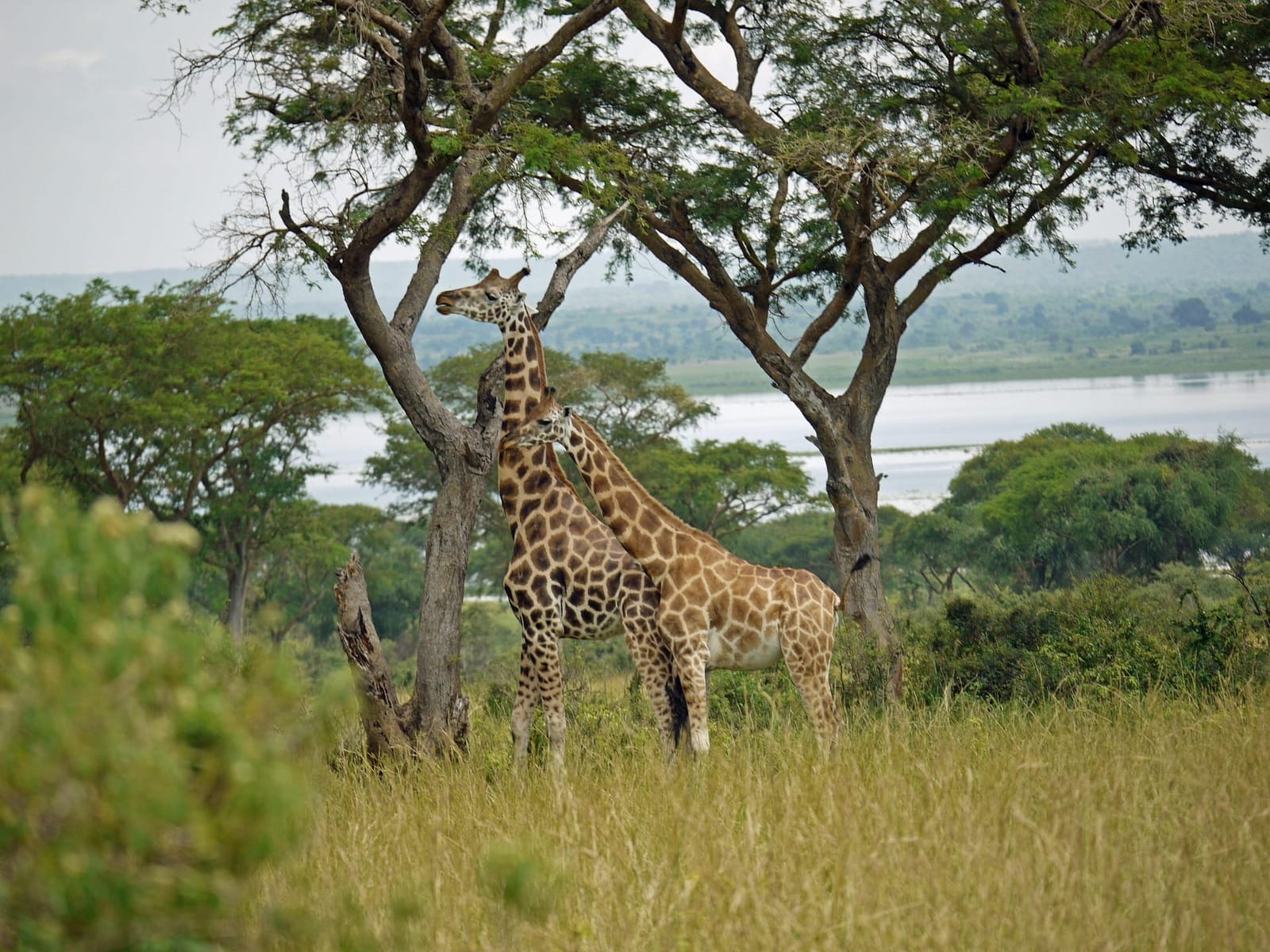
Rothschild's Giraffe
The Rothschild's giraffe (also known as the Baringo or Ugandan giraffe) is one of the most endangered giraffe subspecies on Earth, instantly distinguished by its exceptionally tall stature, pale orange-brown patches, and distinctive white "stockings" that lack markings below the knees. Sporting up to five horn-like ossicones on their heads, these are browsers that play a vital role in trimming the high canopy of acacia woodlands. Using their prehensile, 20-inch purplish-black tongues, they easily maneuver around fierce thorns to feed. [Uganda](/uganda/) is a place where conservation efforts have successfully protected and expanded their remaining populations across protected savannah networks.
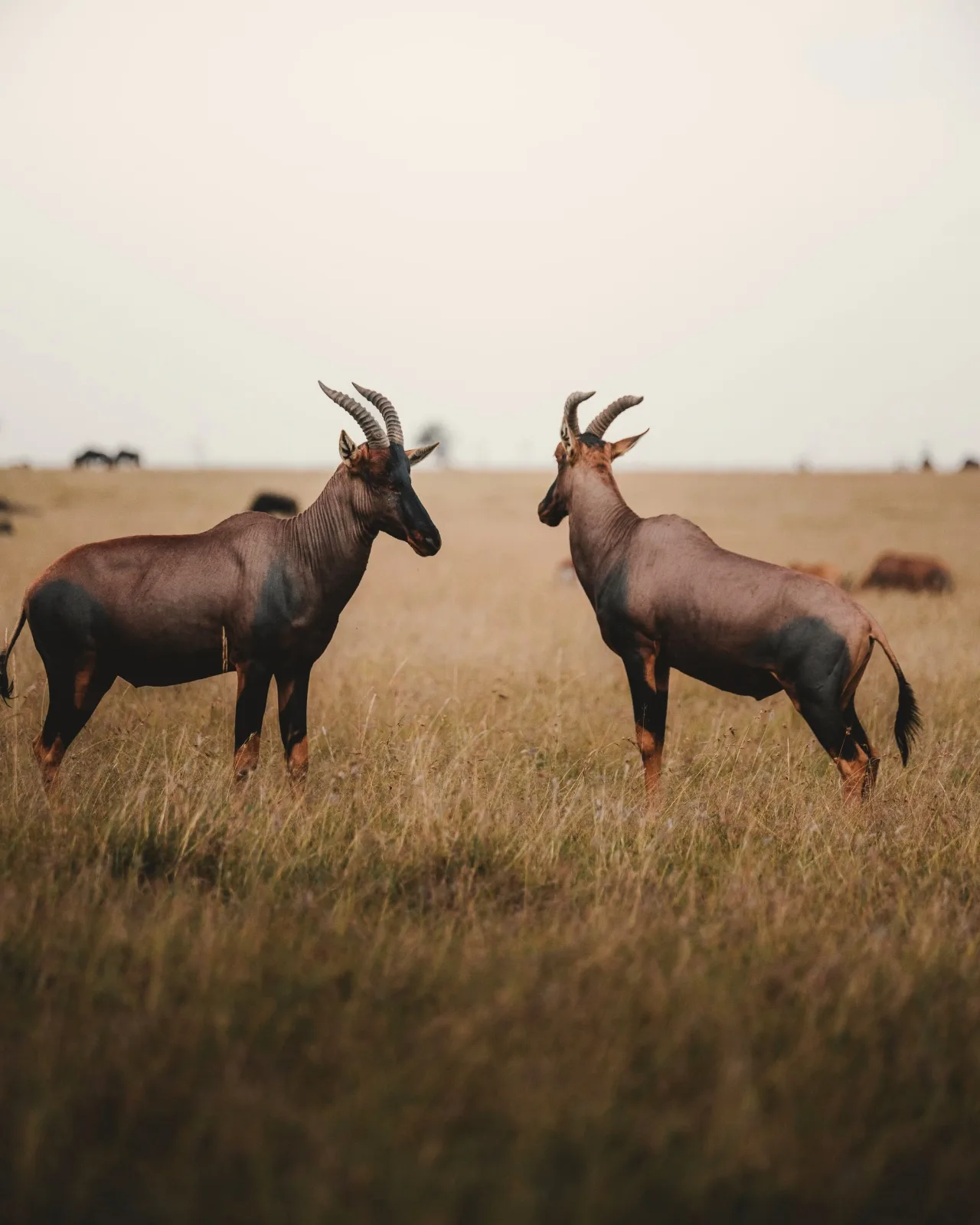
Topi
The topi is a striking, medium-sized antelope renowned for its sleek, reddish-brown coat highlighted by distinct purplish-black patches on its face, upper legs, and hips. Built for exceptional speed, this highly social grazer is widely celebrated for its unique behavior of standing sentinel atop old termite mounds to scan the vast open savannahs for predators like lions and leopards. Topis exhibit fascinatingly fluid social structures, forming tight-knit resident herds or gathering in vast migratory aggregations. They are particularly famous for their competitive lek breeding systems, where males fiercely defend small territories to attract mates.
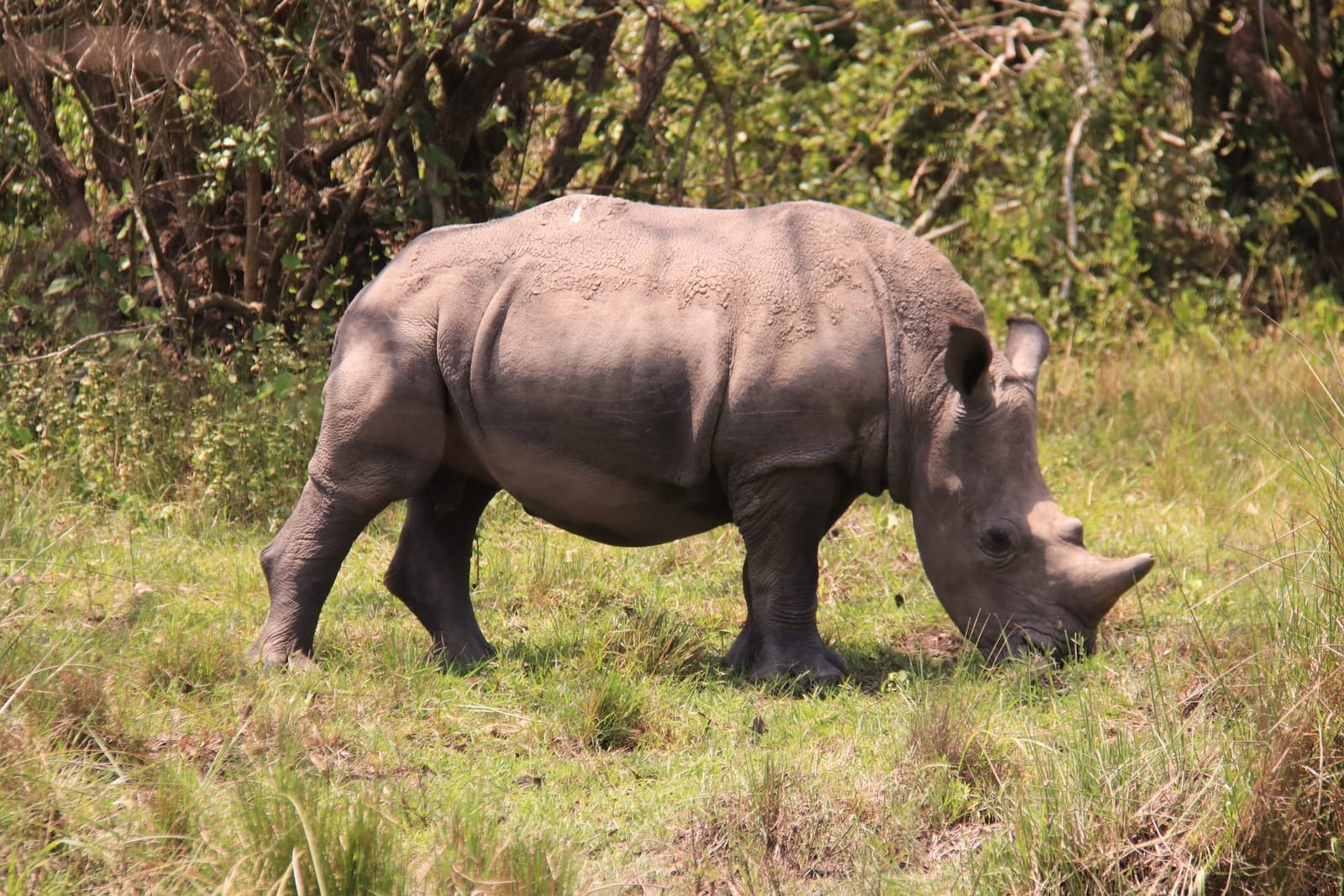
White Rhino
The white rhino is a massive animal, ranking as the second-largest land mammal on Earth after the elephant. It is distinguished from its black rhino relative by a broad, square upper lip perfectly adapted for mowing down vast amounts of short savannah grasses, rather than browsing on branches. The white rhino carries two formidable horns composed entirely of compressed keratin. Despite their immense weight of up to two tons, white rhinos possess surprising agility and speed when charging. Because they are highly short-sighted, they rely heavily on their sharp senses of hearing and smell to navigate their territories and protect their calves within small social groups called crashes.
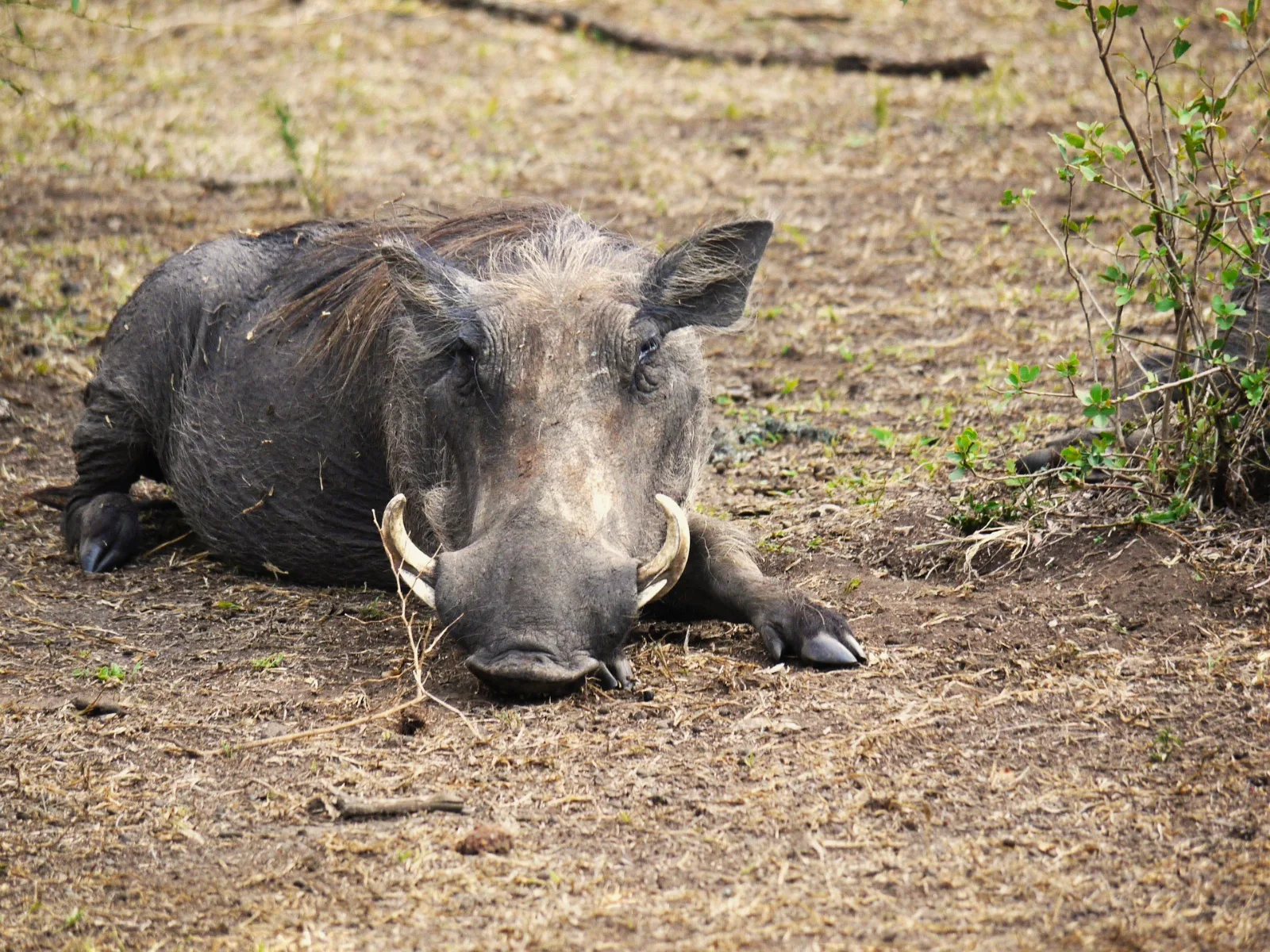
Common Warthog
Common warthogs are one of the most reliable daytime sightings on any Uganda safari. They kneel on calloused front knees to graze close to the ground, a posture tied to the facial growths. It derives its name from the protective fibrous facial warts found on its elongated snout, which are notably larger in males. This wild pig features a sparsely haired, slate-grey body with a prominent mane extending down its spine, and it is equipped with two pairs of razor-sharp, curved ivory tusks used for defense and digging. Quick to bolt, tail held straight up like an aerial when startled, but just as quick to settle back into grazing once the perceived threat passes.
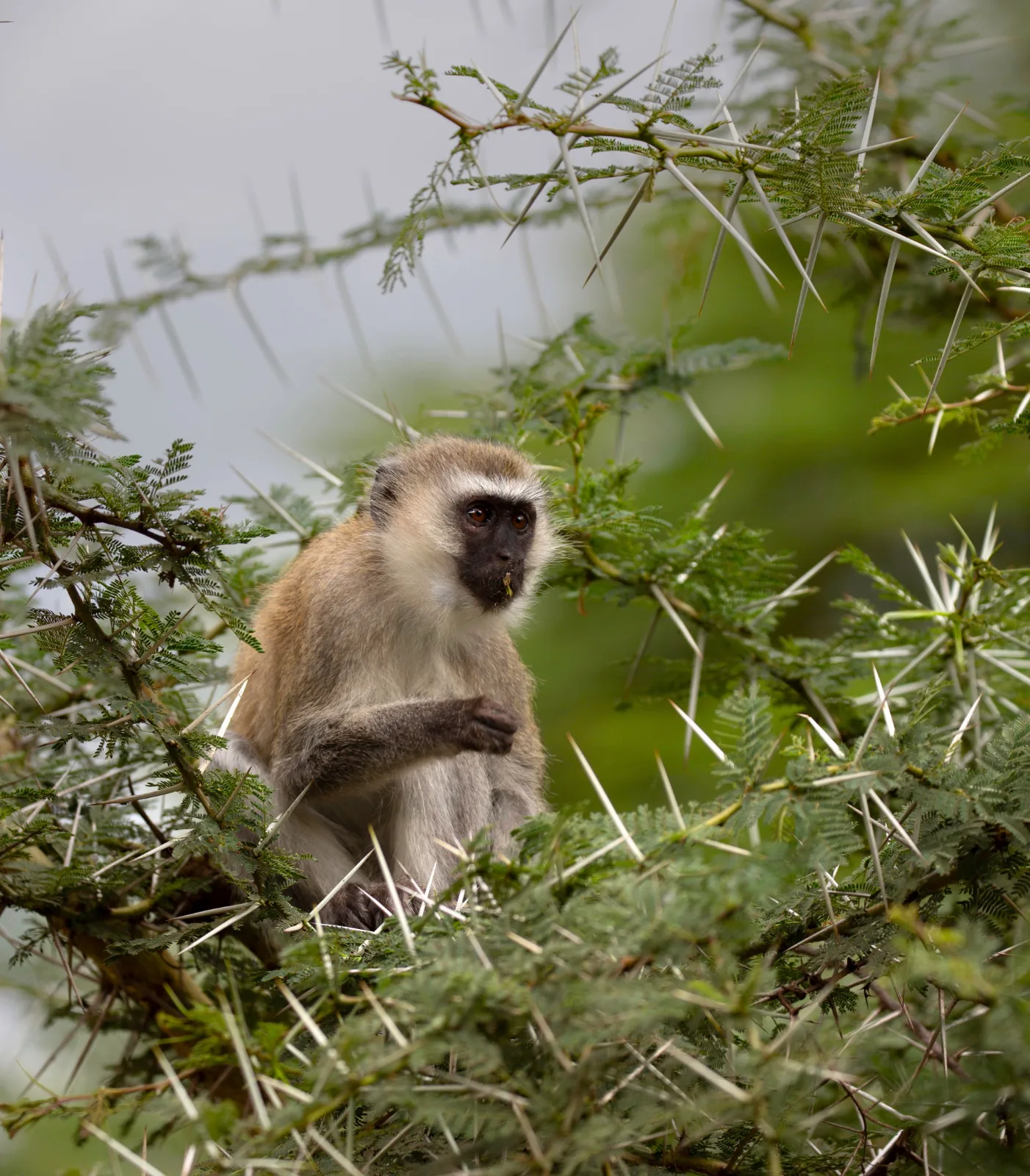
Vervet Monkey
This Vervet Monkey is distinguished by its grizzled grey-green coat, black face, and a white fringe of fur framing its brow. Males possess conspicuous bright blue scrotums that serve as a visual marker of social dominance within the troop. They are agile climbers that navigate acacia branches with ease. Vervet monkeys are the primate most travelers in Uganda see up close, often around lodge grounds at [Lake Mburo National Park](/uganda/national-parks/lake-mburo-national-park/) and [Queen Elizabeth National Park](/uganda/national-parks/queen-elizabeth-national-park/) rather than deep in the forest. They are highly vocal, with distinct alarm calls for snakes, birds of prey, and ground predators, each one different enough that researchers can tell which threat triggered it. Keep food out of sight. A vervet that has learned where lodge kitchens are will not hesitate to take it.
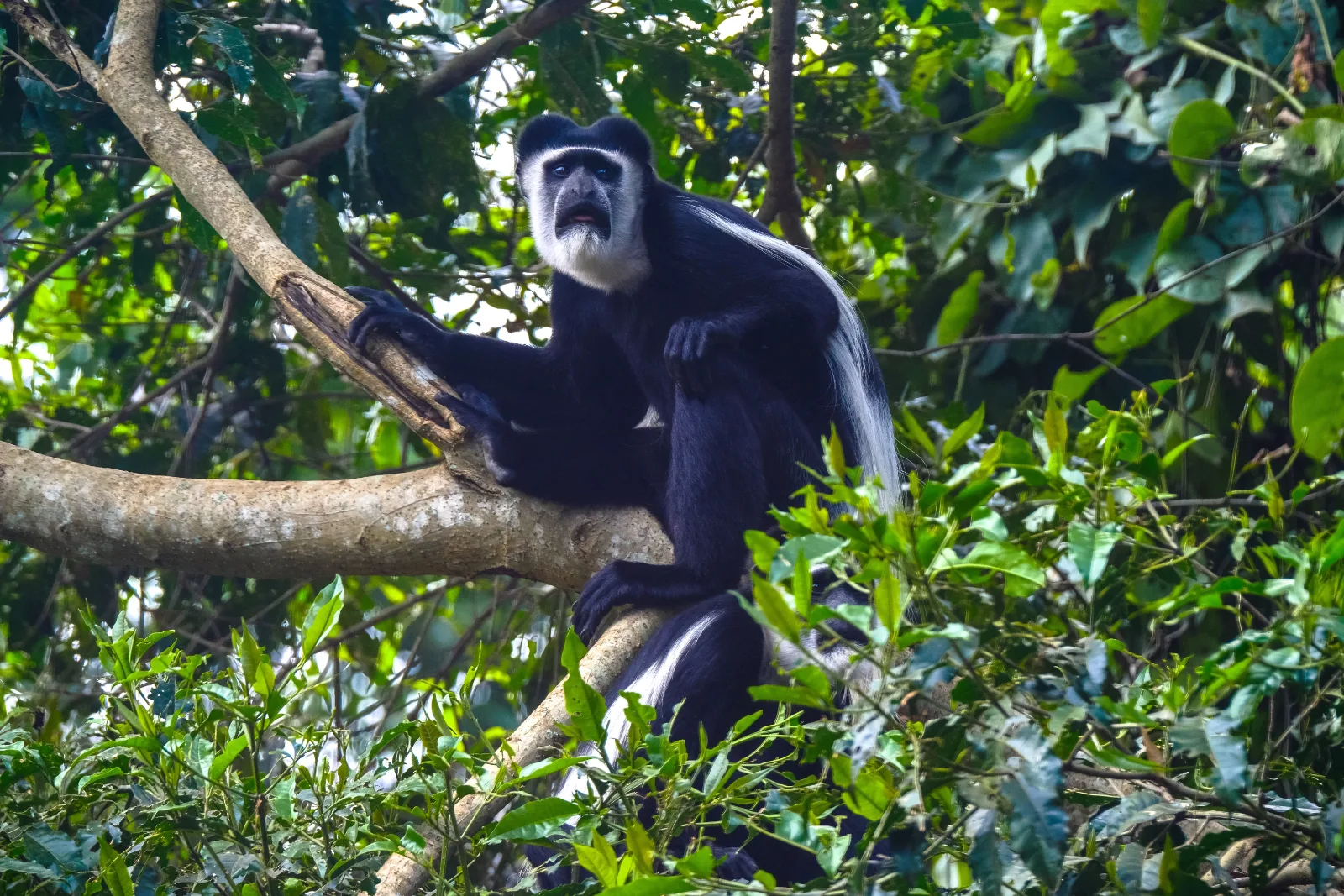
Black-and-White Colobus Monkey
This Black-and-White Colobus Monkey features a glossy jet-black coat contrasted sharply by a u-shaped long white mantle of fur flowing down its back and a bushy white tail. It lacks thumbs, an adaptation that allows its hands to function like hooks for rapid canopy swinging. They possess a complex, multi-chambered stomach specialized for fermenting and digesting tough, fibrous leaves, which form the bulk of their diet. Because they eat almost nothing but leaves, they live in large troops without competing hard for food. Common in the canopy at [Kibale Forest National Park](/uganda/national-parks/kibale-national-park/) and [Bwindi Impenetrable National Park](/uganda/national-parks/bwindi-impenetrable-national-park/), black-and-white colobus monkeys move the way acrobats do, launching themselves across ten-meter gaps between trees.
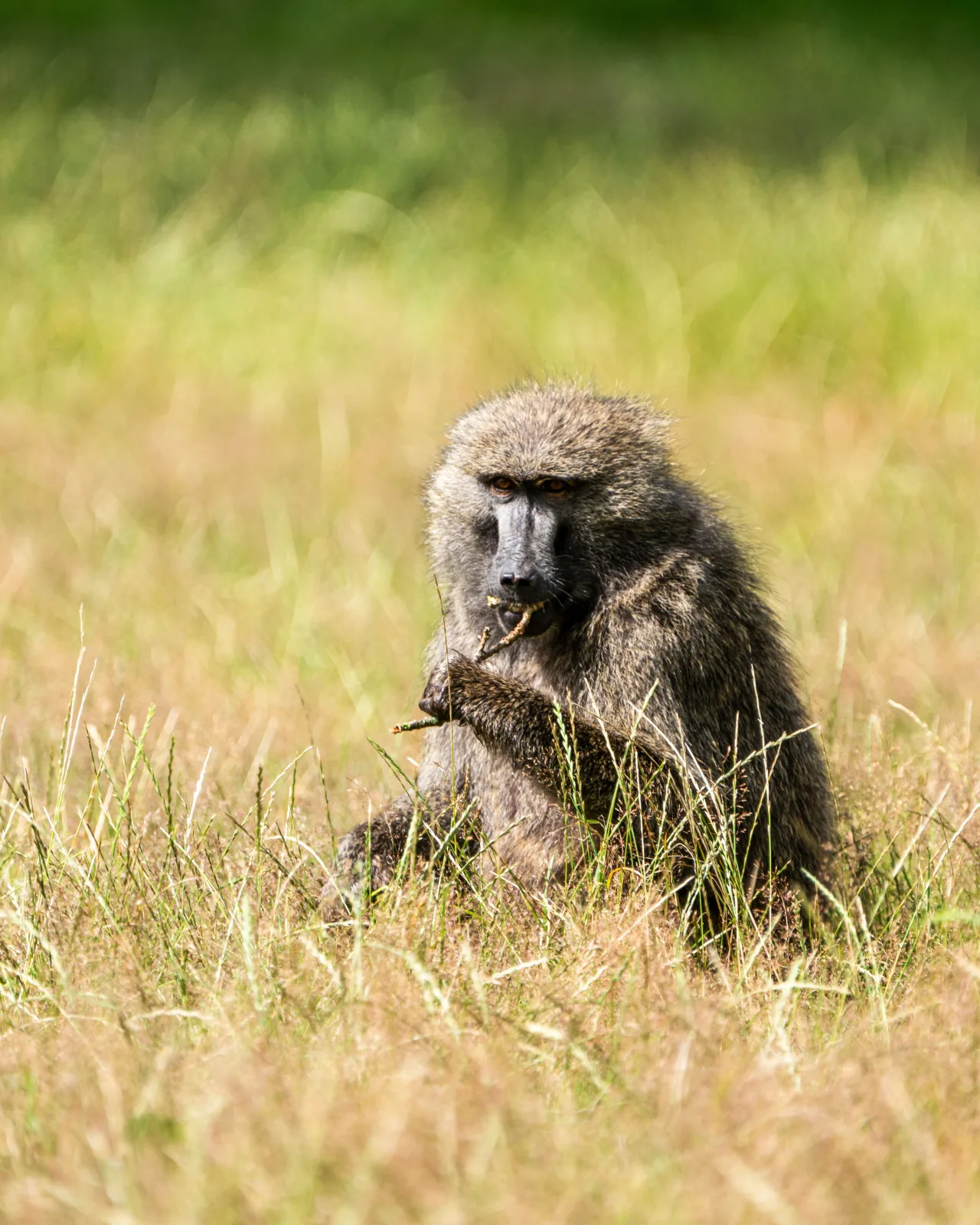
Olive Baboon
Named for its coat of olive-green and grey fur, this large primate features an elongated dog-like muzzle and a heavy, muscular build. They are gregarious omnivores, living in complex hierarchical troops of up to 150 individuals. Exhibiting highly advanced social grooming behaviors, they use their hands to look for grass seeds, roots, insects, and small mammals, and are well-armed with formidable canine teeth for troop defense. You will meet olive baboons on almost every Uganda safari, often before you even reach the park gate. Troops of fifty or more move across the road usually at Queen Elizabeth National Park and Murchison Falls National Park, dominant males pausing to stare down passing vehicles.
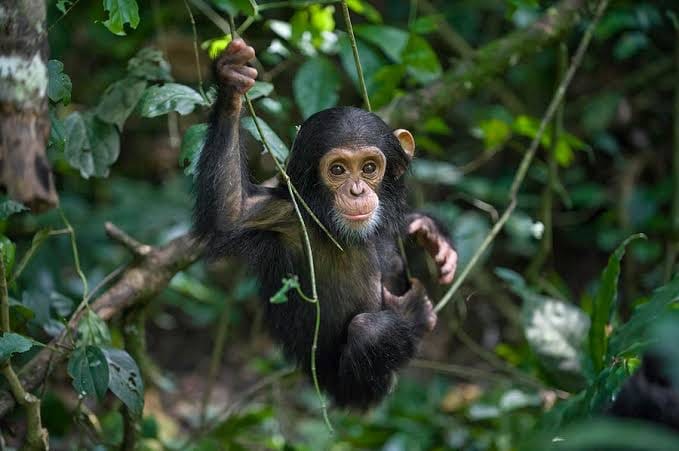
Chimpanzee
The chimpanzee is an incredibly intelligent great ape that shares roughly 98% of its DNA with humans, displaying complex social structures, distinct vocal toolkits, and advanced tool-use capabilities. [Uganda](/uganda/) is famously home to a thriving population of over 5,000 wild chimpanzees scattered across its pristine, dense equatorial rainforests and sunken riverine ecosystems. Living in dynamic fission-fusion communities led by a dominant alpha male, these energetic primates spend their days foraging high up in the forest canopy for fruits and leaves, communicating through a loud, dramatic chorus of pant-hoots that echoes throughout the wilderness. Tracking these expressive, agile apes on foot remains one of the absolute highlights of a premium Ugandan safari itinerary.