
Uganda Wildlife
What You Can See in Uganda
Before you book, know what's actually there, and when. Most trips fail to see everything simply because of bad timing, not bad luck.
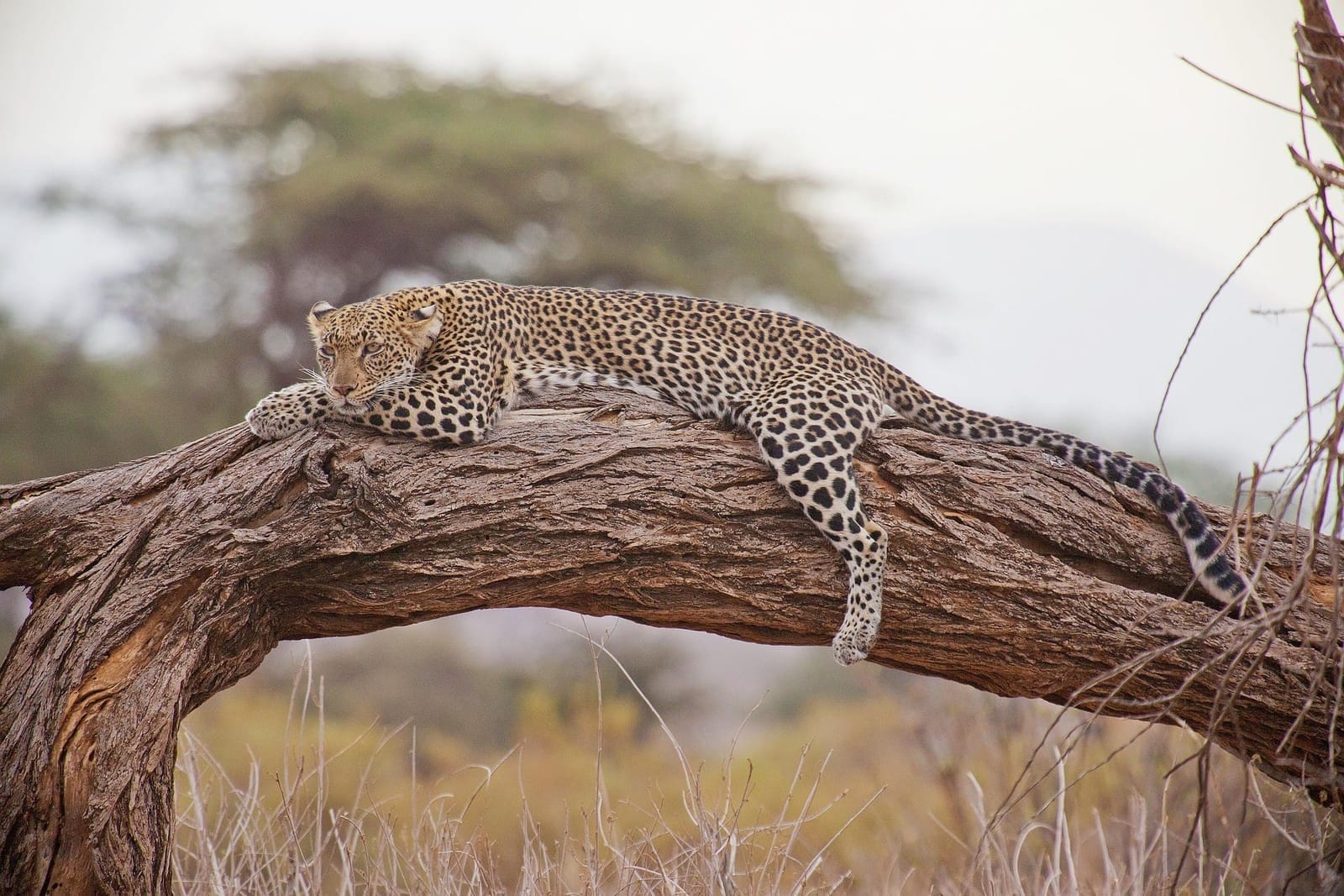
Leopard
Spotting this solitary cat requires a sharp eye and sudden stillness. Unlike lions that dominate open spaces, leopards are masters of shadow, often found draped over thick horizontal branches where their spotted coats dissolve completely into the leaves. There is a quiet tension in watching a leopard; they are intensely alert, watching the ground below with piercing, unblinking eyes. You might catch one guarding a kill hoisted high into the branches to keep it away from scavengers, or walking silently through the undergrowth at dusk as its nocturnal hunt begins. It is an elusive, thrilling encounter that rewards the patient traveler.
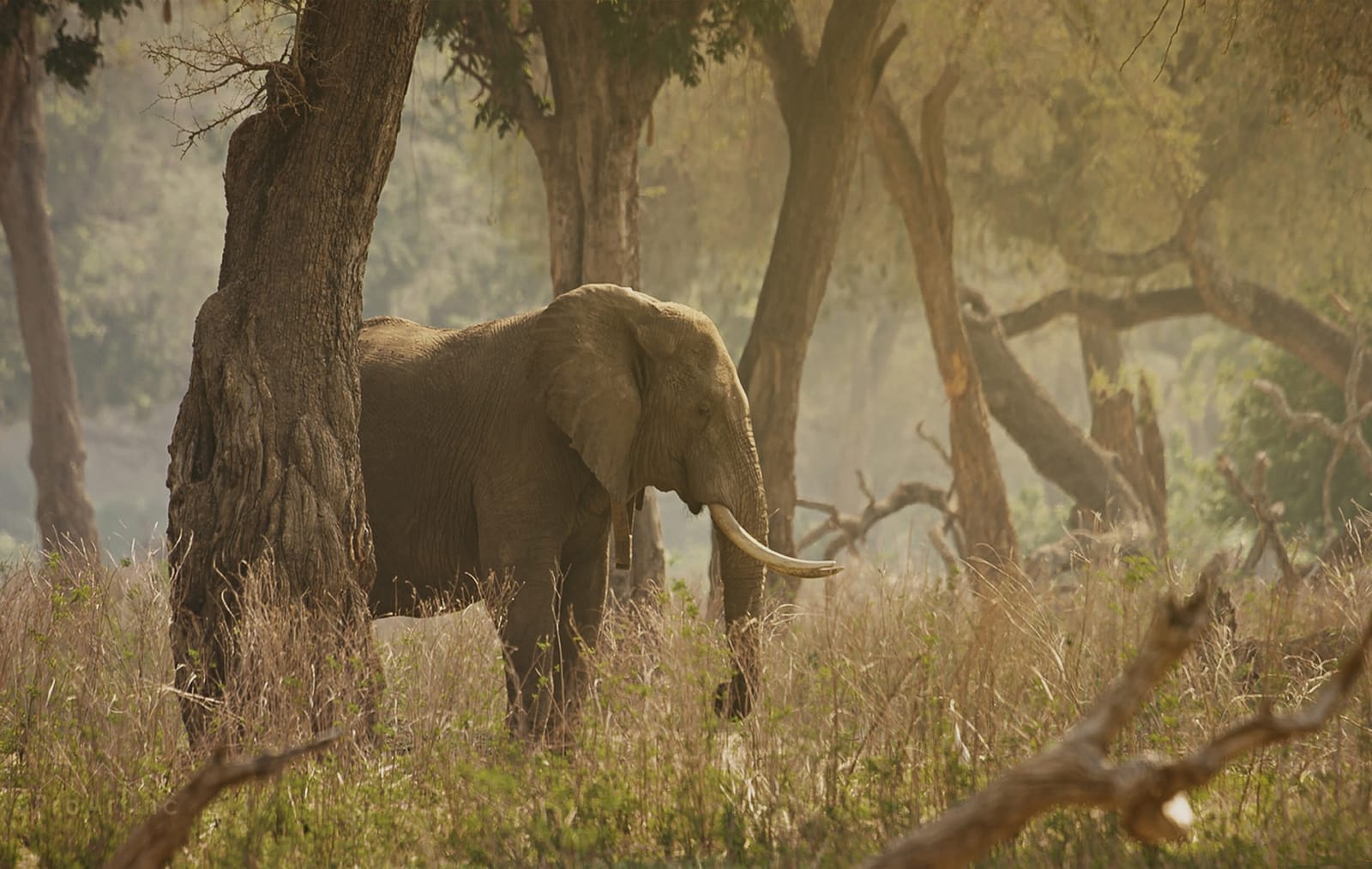
African Bush Elephants
Nothing prepares you for the sudden silence that falls when a herd of the world’s largest land mammals crosses your path. Despite their massive size, elephants move through the bush with a ghost-like quiet, their heavy pads muffling their footsteps until they are right beside you. Watching a family unit interact is deeply fascinating; you will see matriarchs guiding the group, older siblings playfully nudging calves, and trunks reaching up to strip branches with immense power. Listening to their deep rumble vibrate through the ground and watching their protective, intelligent behavior up close is a humbling reminder of the wild's true scale.
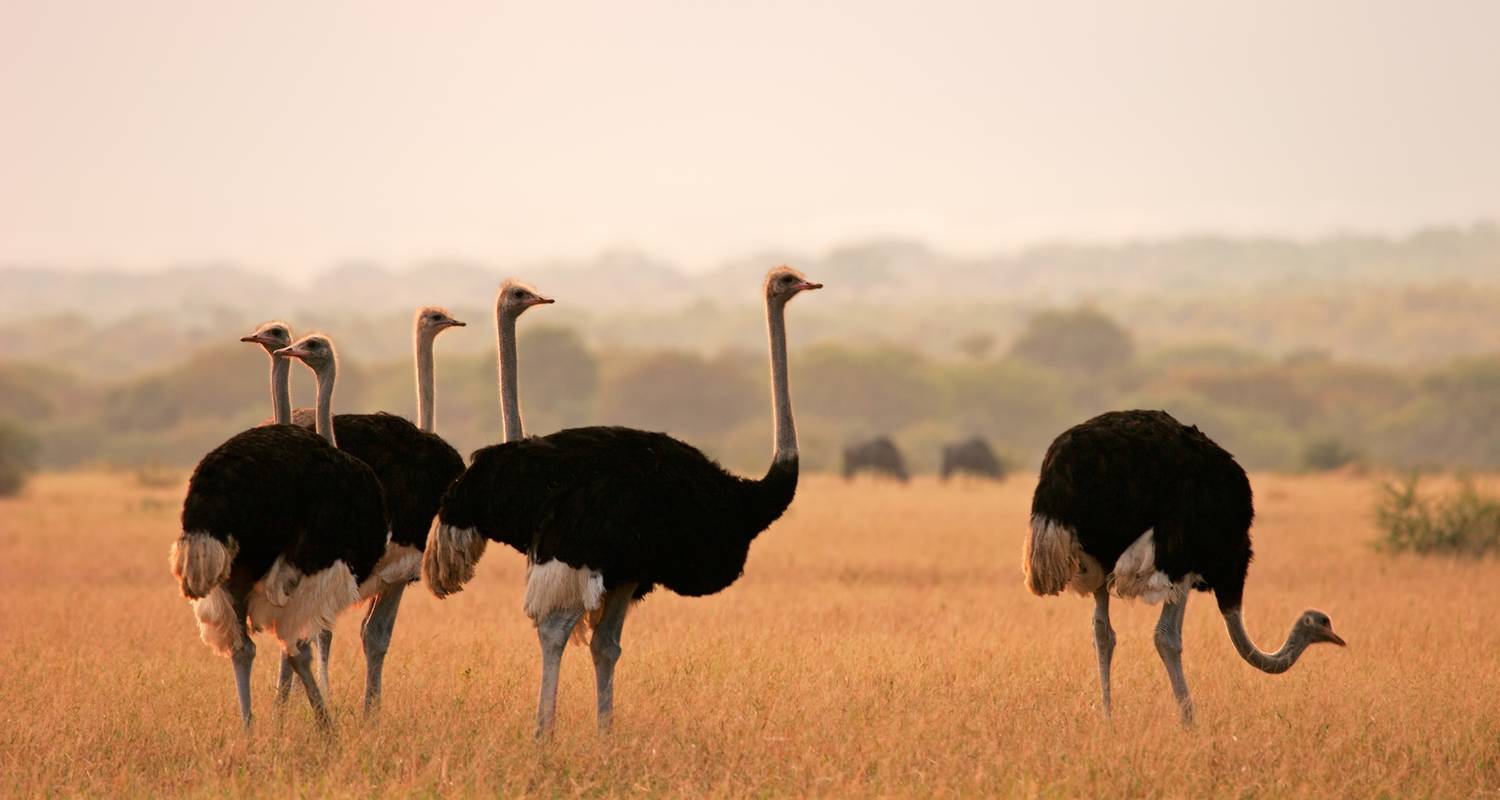
Common Ostrich
Standing before the world's largest bird completely redefines your understanding of avian scale. Towering up to nine feet tall, these giants look like living dinosaurs as they stride across the arid plains with an immense, powerful stride. Watching a male ostrich perform its elaborate courtship ritual—flapping its dramatic black-and-white wing plumes and swaying its bright pink neck from side to side- is a spellbinding display of wild behavior. You will hear the deep, resonant booming calls that sound deceptively like a distant lion's roar, and if you are incredibly lucky, you might witness them explode into a sprint, effortlessly hitting speeds of forty-five miles per hour across the open ground.
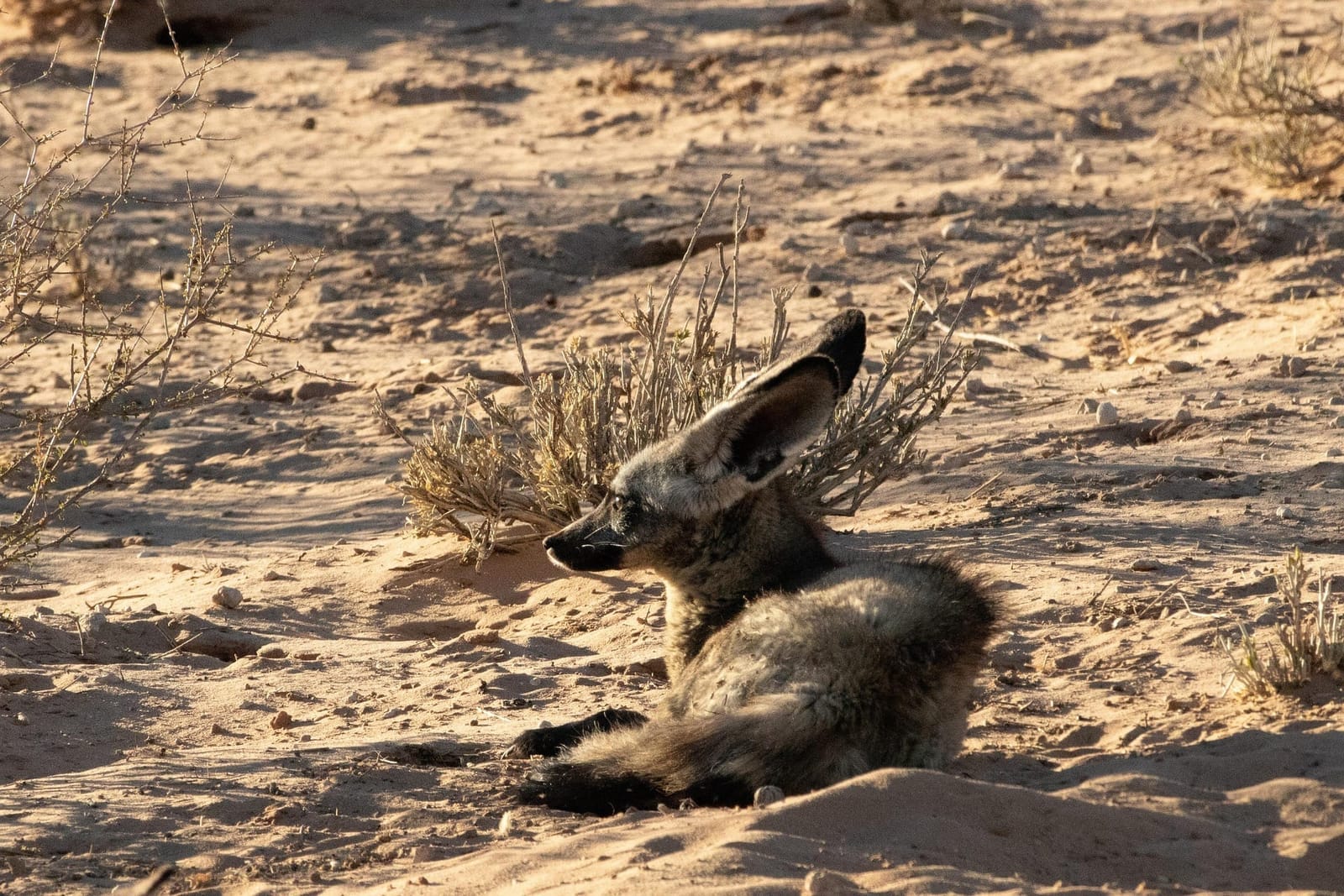
Bat-eared Fox
Spotting this small, fascinating predator during the cooler hours of the day or on a night drive is a lesson in absolute sensory focus. Instantly recognizable by their disproportionately large, dish-like ears, these foxes spend their time with their heads lowered close to the ground, listening intently for the subterranean movements of harvester termites and beetles. To watch them hunt is mesmerizing; they tilt their heads from side to side before frantically digging into the soil with their sharp claws to unearth their insect prey. Moving in small, tightly-knit family groups, their massive ears, dark eye masks, and bushy, black-tipped tails give them an incredibly distinct, endearing presence on the open plains.
Striped Hyena
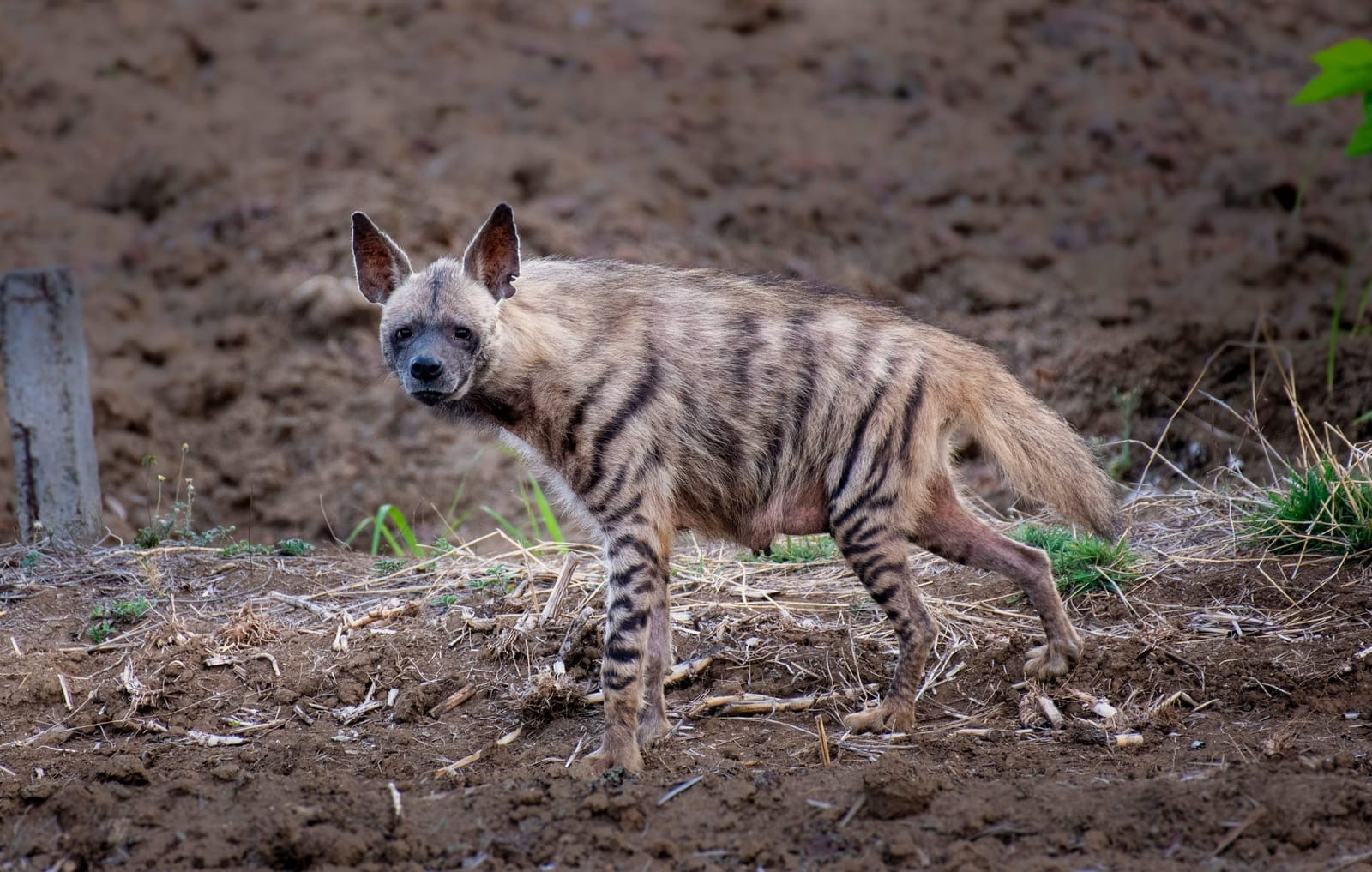
Catching a glimpse of this solitary, nocturnal scavenger is an absolute rarity that feels like stepping into an ancient wilderness story. Smaller and far more secretive than their spotted relatives, striped hyenas are instantly recognizable by the vertical charcoal bands running down their silver-grey coats and a massive, bristly mane that stands erect when they are startled. To see one emerging from the shadows during a night drive is to witness pure caution; they move with a low, slinking trot, using their powerful jaws and keen scent to locate carcass remnants long abandoned by larger predators. It is an eerie, beautiful encounter that connects you deeply to the hidden night shift of the savannah.
Rothschild's Giraffe
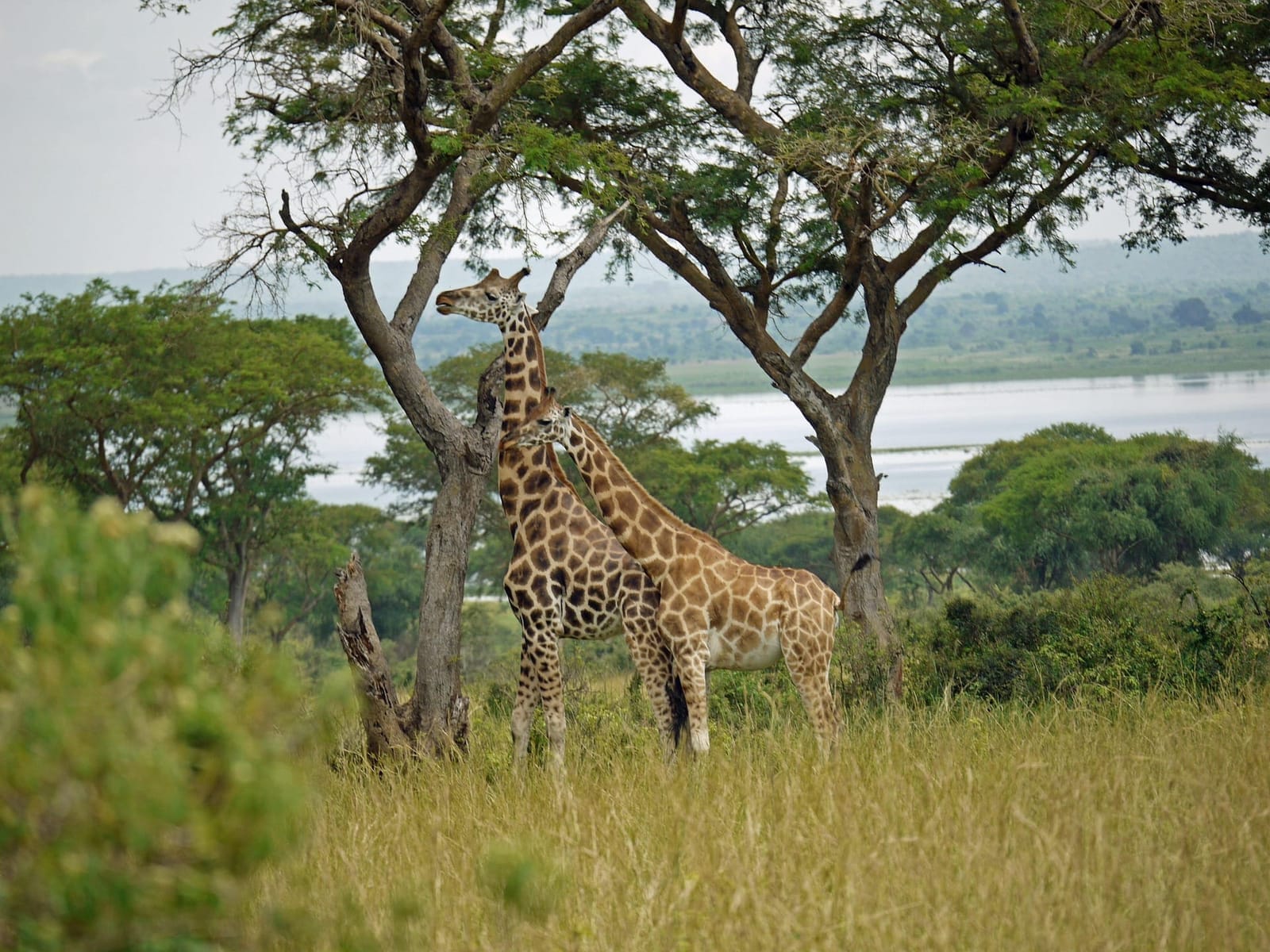
Watching the world's tallest mammal step through the acacia woodlands is a lesson in slow-motion elegance. Up close, the immediate giveaway is their unique coloring: their distinct chestnut patches stop abruptly at the knees, making them look as though they are wearing clean, white stockings. Standing quietly beneath them, you can hear the surprising sound of their long, prehensile purple tongues stripping leaves right past vicious two-inch tree thorns. While they often move in small, graceful family clusters, coming across a massive nursery herd of dozens of towering adults and playful calves moving synchronously across the horizon is a striking, surreal image that redefines your sense of scale.
Cheetah
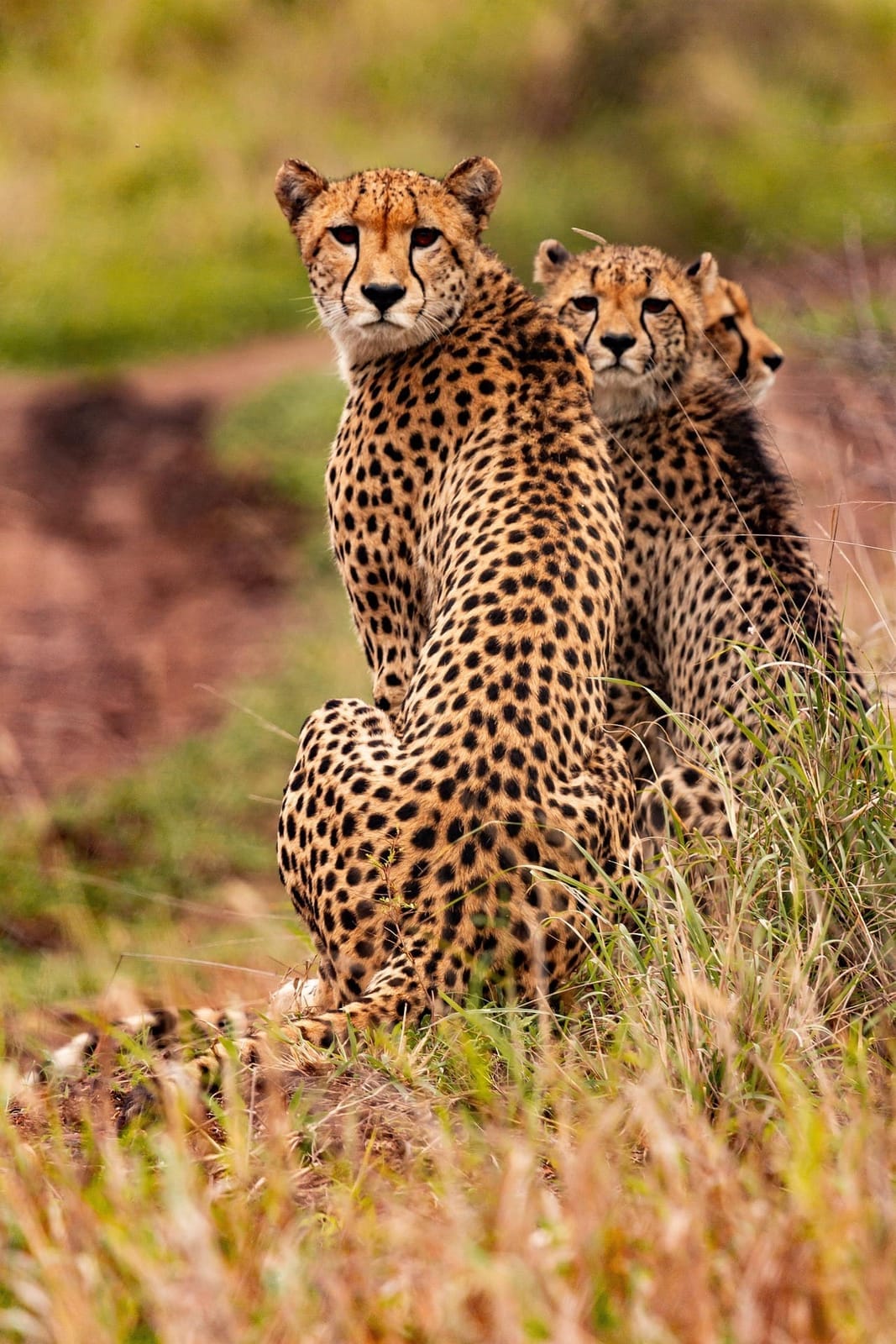
Watching the world's fastest land mammal requires scanning wide, flat horizons where the grass burns gold. Unlike other big cats that rely on raw power and nighttime ambush, cheetahs are daytime hunters built for pure athletic speed. Seeing one sitting on top of an old termite mound or a low rock, using the elevation to spot distant prey, is an exercise in symmetry and focus. When they lock onto a target, their entire posture flattens, moving through the grass with a fluid, silent stride before exploding into a high-speed blur. Catching sight of this sleek, vulnerable predator in the open plains is a rare highlight of the open savannah.
Caracal
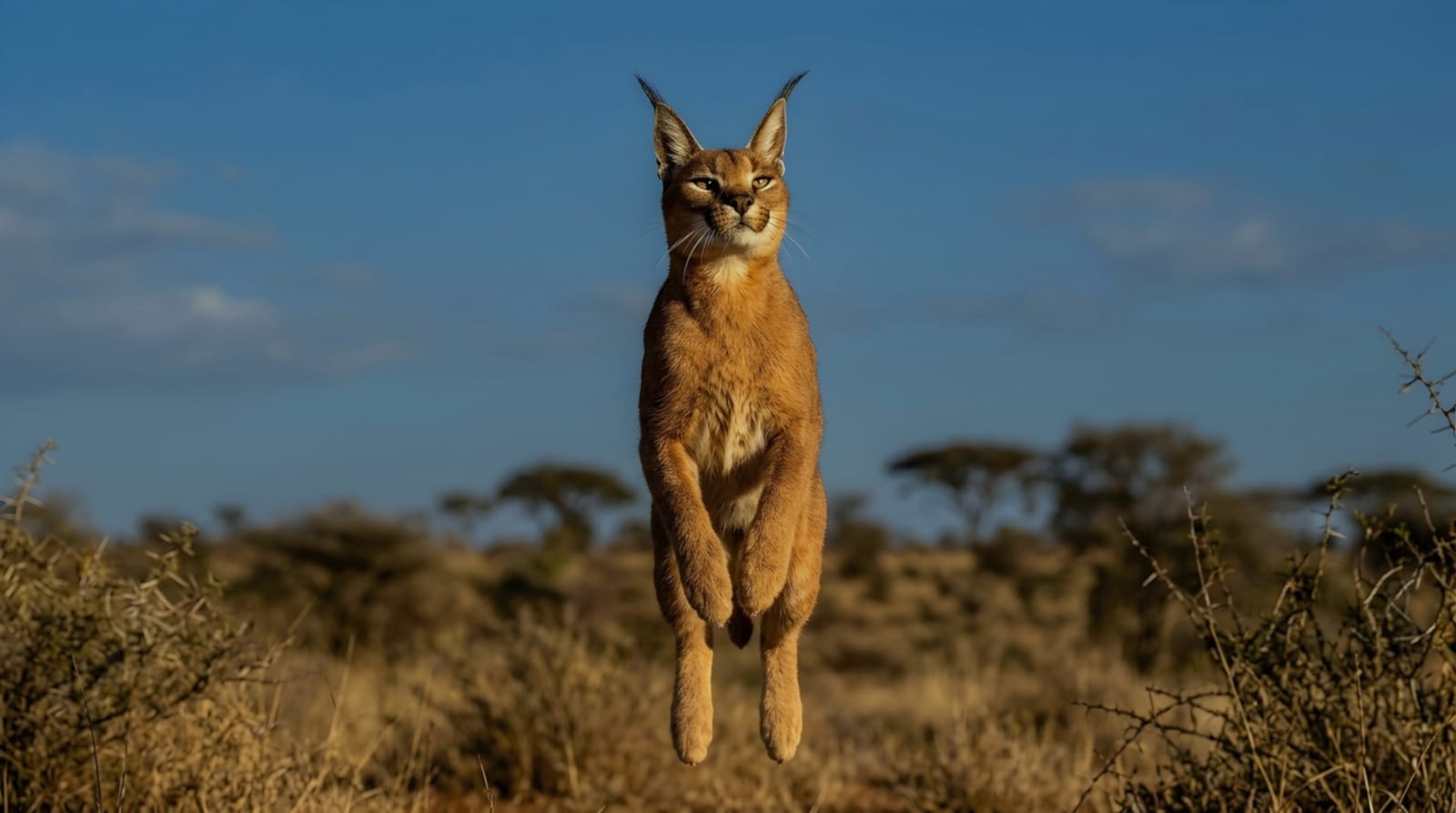
Catching sight of this secretive, amber-eyed cat is an absolute triumph for any safari tracker. Renowned for its extraordinary agility, the caracal is easily identified by the long, dramatic tufts of black hair tipping its large, expressive ears. To see one hunting is to watch masterclass acrobatics; they crouch completely motionless in the tall grass before leaping up to ten feet straight into the air to snatch birds right out of flight. They are incredibly solitary and move like fleeting ghosts through the drier thickets, turning their sleek, muscular bodies away from human eyes at the slightest sound. It is a rare, electrifying encounter that stays with you long after the safari ends.
Aardwolf
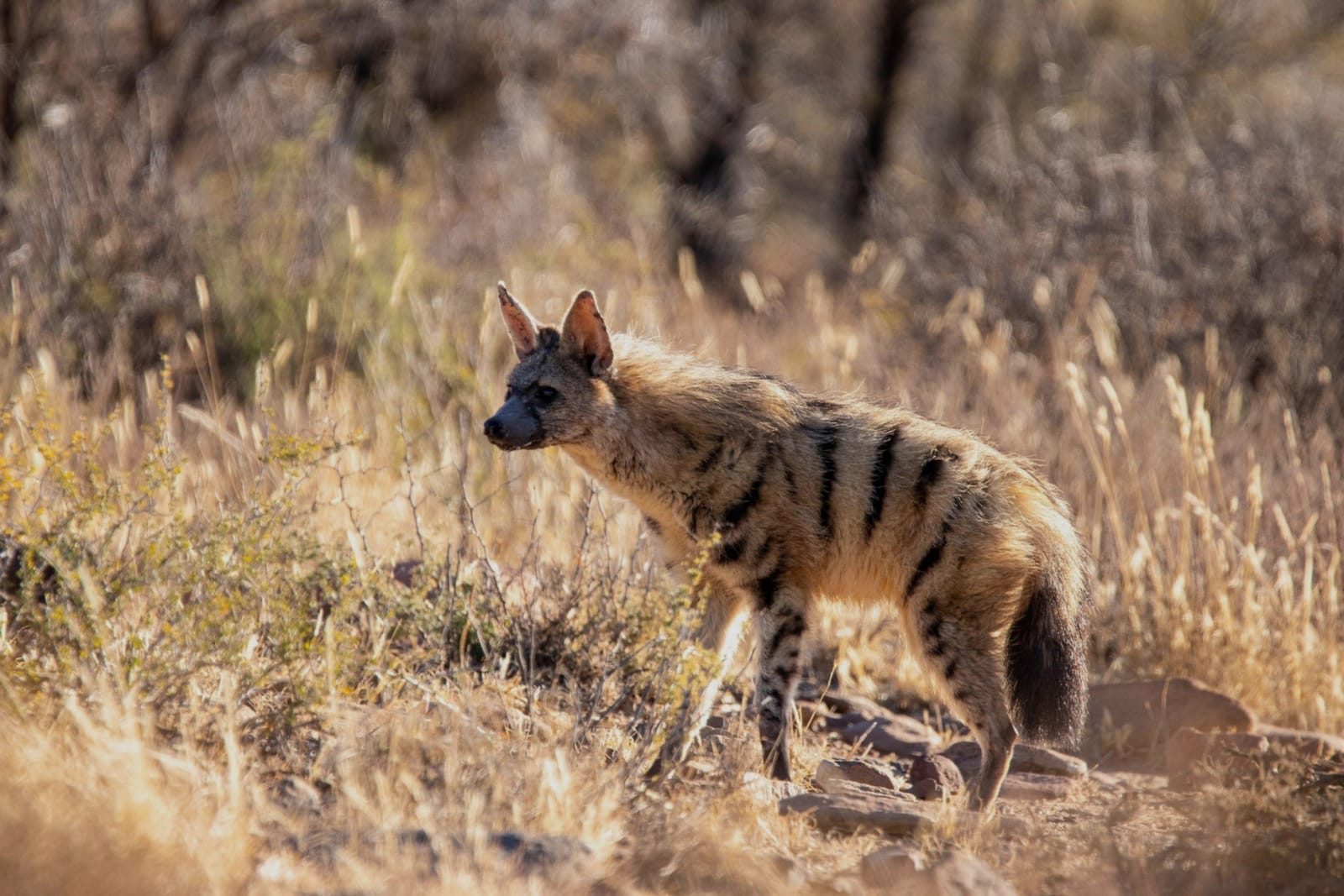
Catching sight of this elusive, insect-eating specialist is a rare prize reserved for the patient night tracker. Looking like a delicate, striped hyena with a slender muzzle, the aardwolf avoids the bloody kills of its larger cousins, spending its nights methodically licking thousands of termites from the soil with a broad, sticky tongue. To see one under a spotlight at dusk or during a night drive is to witness a creature of absolute caution; its large, sensitive ears twitch at the slightest rustle, and it will instantly flare its long, dark mane to look twice its size if startled. It is a strange, gentle encounter that offers a fascinating look into the savannah's hidden nocturnal micro-world.
African Lion
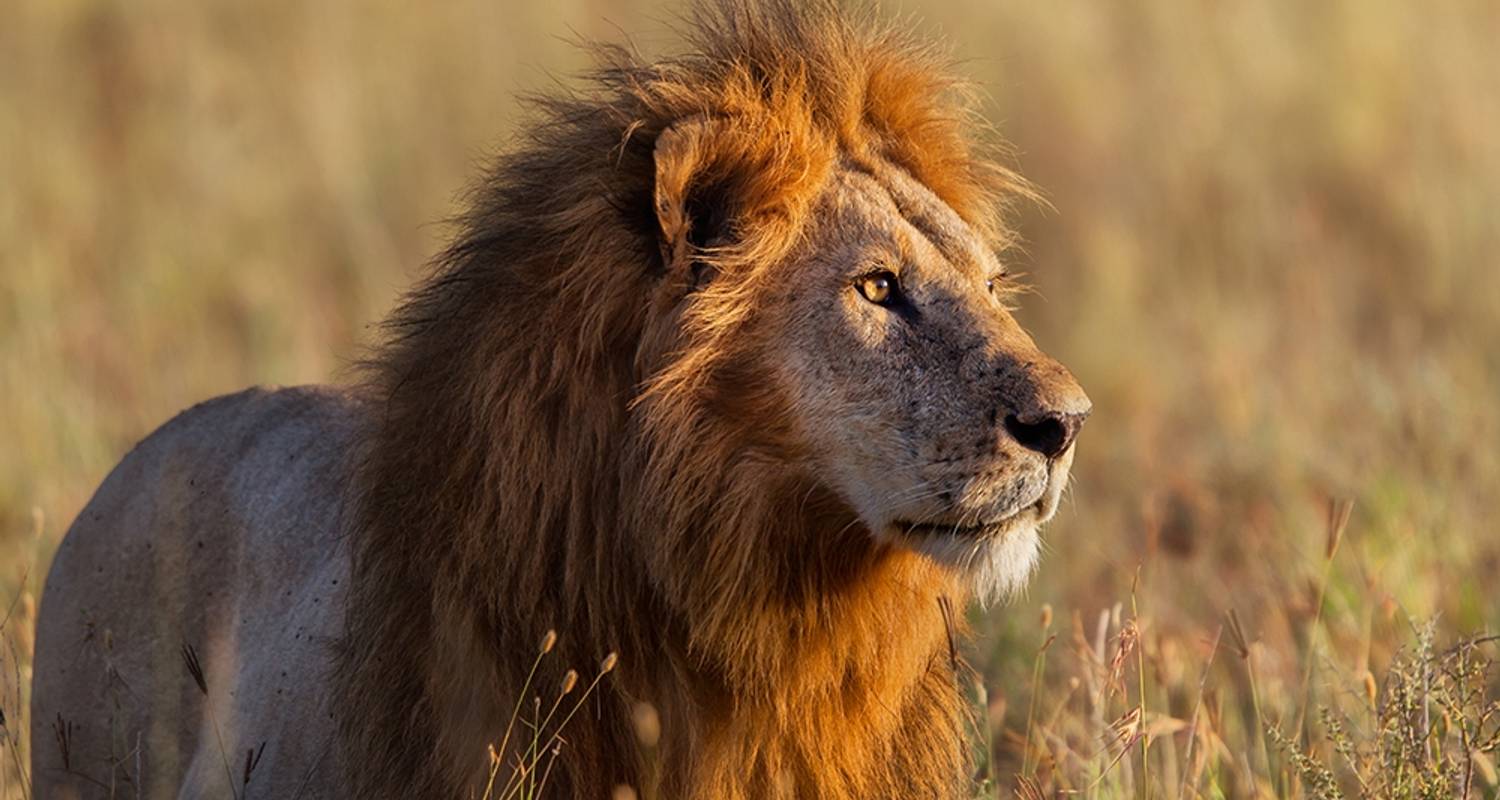
You will likely hear them before you see them: a deep, low grunting that vibrates the air outside your vehicle at dawn. While most African safaris feature lions walking through dust, Uganda offers something bizarre: prides that spend their afternoons compressed into the low, thick branches of sycamore fig trees in Ishasha to escape ground heat and biting insects. For a completely different atmosphere, the remote north in Kidepo lets you watch prides using massive granite kopjes (rock boulders) as lookout points, completely undisturbed by other vehicles. If you want a closer look, skip the standard game drives and request an experimental tracking permit in Queen Elizabeth National Park. You'll head off-road with a researcher using radio-telemetry collars to find prides hidden deep in the thickets, well away from the tourist tracks. You can also see the lions in Murchison Falls National Park.
African Cape Buffalo
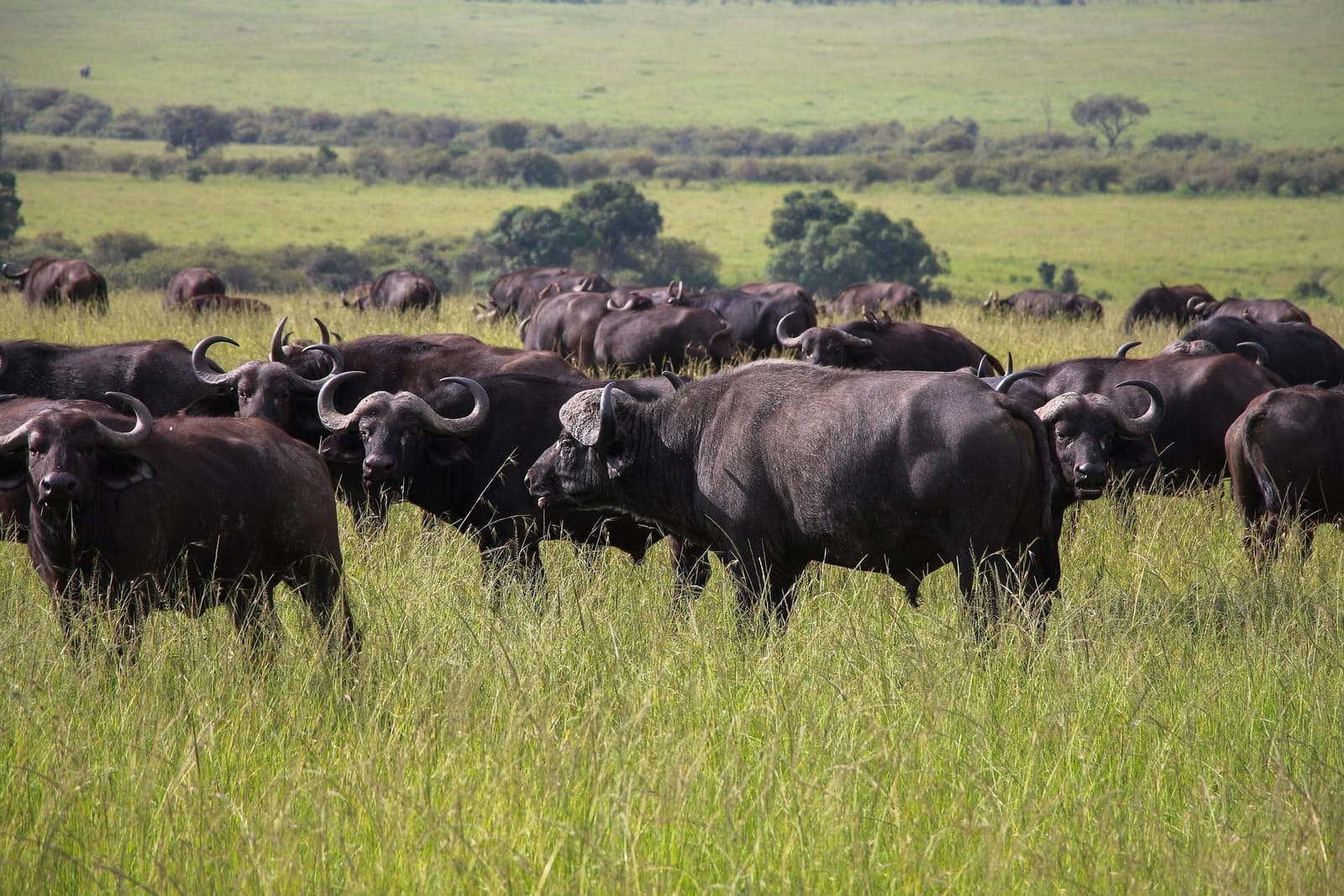
Coming face-to-face with a massive herd of buffaloes reveals a heavy, intimidating presence that feels completely different from watching other grazers. These are not passive animals; they turn to face you as a united front, locking eyes with an intense, unblinking glare beneath their fused, helmet-like horns. The air fills with the smell of kicked-up dust and the low grunting of hundreds of individuals moving together through the brush. Watching old bulls, covered in mud and scars, guard the edges of the herd gives you an immediate appreciation for their raw power and notoriously stubborn, protective nature.
Burchell's Zebra
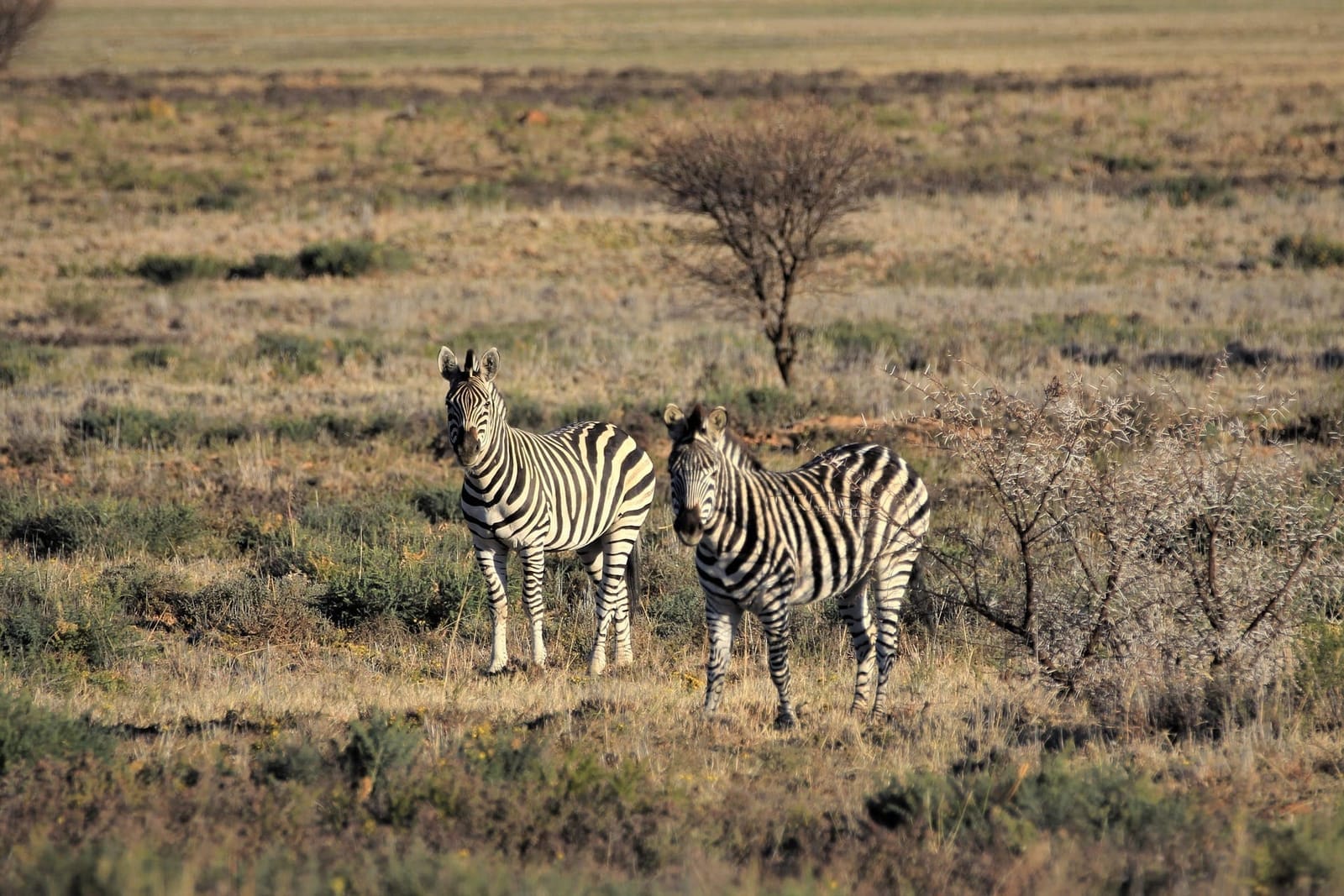
Coming across a large dazzle of zebras fills the savannah with an unexpected, frantic energy. Unlike the clean black-and-white lines you see in textbooks, Burchell's zebras feature distinct, faint brown "shadow stripes" bleeding into their white bands. Standing close to a herd, you will hear their constant, high-pitched barking calls and the sharp thud of hooves as stallions pick fights to protect their mares. Watching hundreds of these striped patterns blur together as they bolt across the open grass creates a dizzying optical illusion designed to confuse predators, and it leaves you completely captivated by the motion.