
乌干达活动
徒步游猎
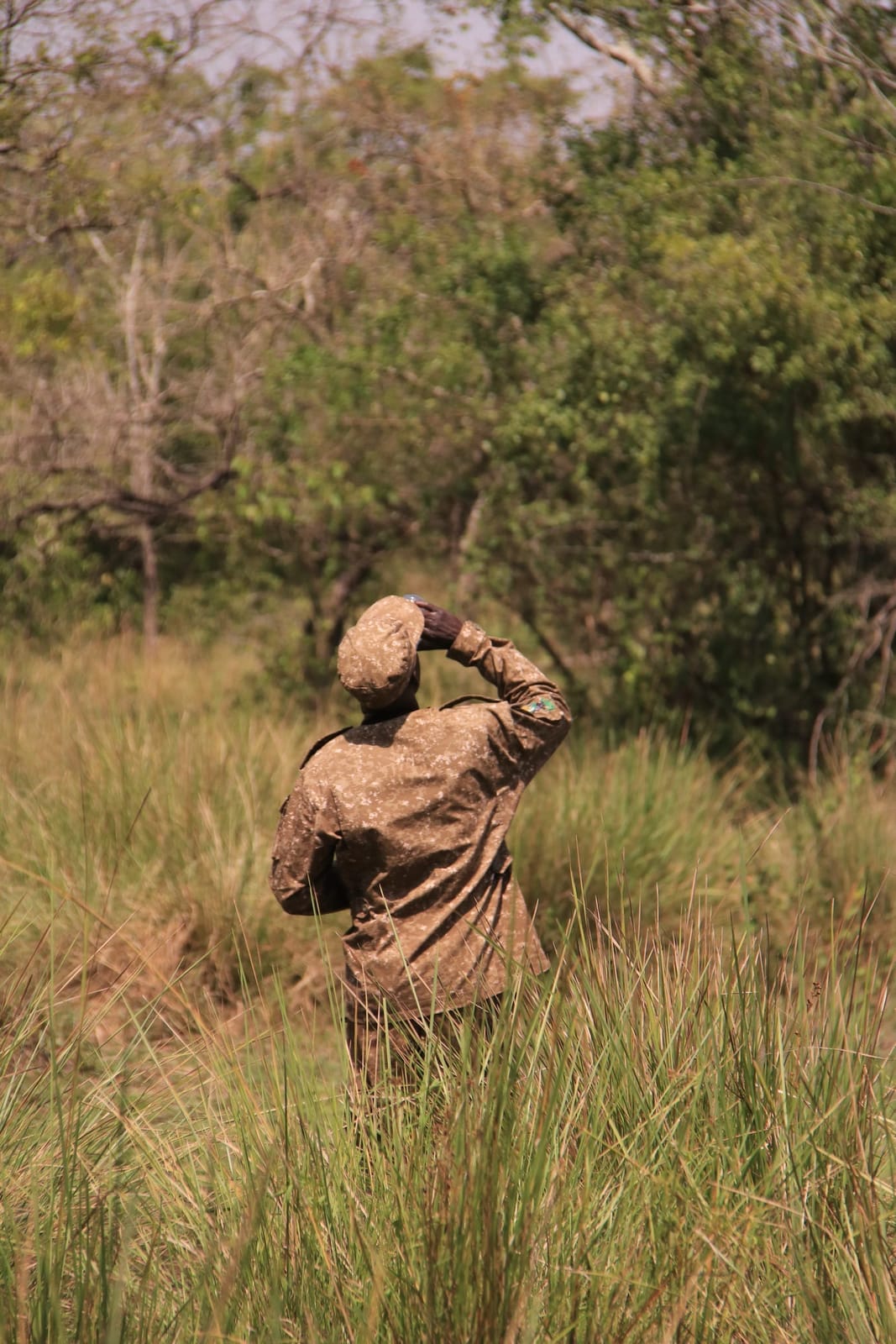
从越野车上走下来,徒步探索非洲丛林,通过足迹和细微的野外线索追踪野生动物的踪迹。
- 会发生什么
- 您将与全副武装的巡护员和Huko Safaris的专业向导会合,听取安全说明后,便直接踏入荒野。 您将沿着动物小径前行,辨识动物足迹、粪便和独特的植物群落,同时了解当地原住民如何利用自然资源制作药物。向导会时刻观察风向,让您能够安全地接近斑马、长颈鹿或羚羊等大型哺乳动物,而不会惊扰它们。
- 那种感觉
- 车辆的安全屏障不复存在,取而代之的是与大地之间那种原始而直接的联结。靴底踩碎树枝的咔嚓声,以及野生鼠尾草的气息,让你保持着极度的专注。当你意识到自己正行走在野生动物曾经走过的同一条小径上时,心跳不由得加快了。
- 适用对象
- 适合那些体能中等、喜欢亲身体验而非坐在车里的活跃旅行者、情侣和自然爱好者。
- 实用信息
- 必须穿着结实、包头式的步行鞋或登山靴。长裤和土色系服装有助于防止昆虫叮咬,并让你与周围环境融为一体。徒步活动通常安排在清凉的清晨进行,持续两到三小时,根据保护区的不同,参与者的最低年龄要求为十五岁。
与……一同体验野生动物之旅 徒步游猎
去哪里做 徒步游猎 在乌干达
Lake Mburo National Park
Lake Mburo National Park is Uganda's smallest savannah park and the closest one to Kampala, reached in roughly 3.5 to 4 hours by road, which makes it the country's go-to stop for travelers short on time or breaking up the long drive southwest to Bwindi. Its 370 square kilometers of acacia woodland and open grassland sit around five lakes, the largest of which, Lake Mburo itself, gives the park its name and its boat safaris.
Kidepo Valley National Park
Kidepo Valley National Park is Uganda’s most remote and ruggedly beautiful savanna wilderness, spanning 1,442 square kilometers in the extreme northeastern Karamoja region. Bordering South Sudan and Kenya, the park features a dramatic landscape dominated by the Narus and Kidepo valleys, flanked by the soaring Mount Morungole and rugged mountain ranges. Because it is isolated, it receives a fraction of the tourists found in western Uganda, providing an exclusive, untamed safari atmosphere reminiscent of Africa fifty years ago. The park protects a diverse ecosystem of montane forests and semi-arid savanna grasslands. It is home to 86 mammal species and over 460 bird species, including many found nowhere else in the country.
Rwenzori Mountains National Park
Rwenzori Mountains National Park protects Africa's highest non-volcanic range, the 'Mountains of the Moon,' straddling the border with the Democratic Republic of Congo in western Uganda. Its highest point, Margherita Peak on Mount Stanley, reaches 5,109 meters, and the range's equatorial glaciers and afro-alpine vegetation earned it UNESCO World Heritage Site status in 1994.
Mount Elgon National Park
Mount Elgon National Park protects an extinct shield volcano straddling the Uganda-Kenya border in eastern Uganda, centered on one of the largest intact calderas in the world at roughly 8 kilometers across. The mountain's lower slopes around Sipi are also Uganda's main Arabica coffee-growing region, giving the park a hiking-and-coffee-country character distinct from the gorilla and savannah parks further west.
Semuliki National Park
Semuliki National Park sits on the floor of the Albertine Rift in far western Uganda, near the Democratic Republic of Congo border, protecting one of East Africa's few remaining pockets of lowland tropical rainforest, an extension of the Ituri Forest across the border. It is one of Uganda's premier birding destinations, with over 400 recorded species, many found nowhere else in East Africa.
Toro-Semliki Wildlife Reserve
Toro-Semliki Wildlife Reserve sits on the floor of the Albertine Rift in western Uganda, between the Rwenzori foothills and Lake Albert, directly adjacent to Semuliki National Park's rainforest. Its drier savannah and borassus palm woodland give it a genuinely different look from the forests around it, and its Semliki River frontage is one of the best places in the region to watch crocodile.
Kyambura Wildlife Reserve
Kyambura Wildlife Reserve protects the Kyambura Gorge, a steep-sided ravine of riverine forest cut into the open savannah on the eastern edge of Queen Elizabeth National Park's ecosystem. Locally nicknamed the 'Valley of Apes,' it holds one of Uganda's smaller habituated chimpanzee communities, reachable on foot from the gorge rim.
Budongo Forest Reserve
Budongo Forest Reserve is Uganda's largest surviving natural mahogany forest, bordering Murchison Falls National Park's southern boundary in Masindi district. It holds one of the country's largest wild chimpanzee populations, estimated at several hundred individuals, tracked at two main trekking sites, Busingiro and Kaniyo Pabidi.
Kalinzu Forest Reserve
Kalinzu Forest Reserve sits just south of Queen Elizabeth National Park along the Kasese-Mbarara road, a mid-altitude tropical forest known for chimpanzee trekking at a noticeably lower cost than Kibale's. Its forest trails also hold eight other primate species and some of western Uganda's best accessible forest birding.
Maramagambo Forest
Maramagambo Forest sits within Queen Elizabeth National Park's southern sector, a tropical forest best known for its Bat Cave, where rock pythons wait at the cave mouth to prey on the thousands of bats roosting inside, a sight that drew international attention after being filmed for a nature documentary.
Mabira Central Forest Reserve
Mabira Central Forest Reserve is the largest surviving natural forest in central Uganda, roughly 90 minutes from Kampala along the road to Jinja. It's best known for its canopy zipline course, a rare adventure-tourism product inside a genuine rainforest, alongside its red-tailed monkeys and black-and-white colobus.
Bugoma Central Forest Reserve
Bugoma Central Forest Reserve in Hoima district protects one of Uganda's most significant remaining forest blocks outside the national park system, and one of the country's largest unprotected wild chimpanzee populations. Its future has become a genuine conservation story as agricultural development presses against the forest boundary.
Mpanga Central Forest Reserve
Mpanga Central Forest Reserve sits a short, easy drive from both Kampala and Entebbe along the Masaka road, a compact tropical forest that functions as the quickest rainforest introduction for travelers with only a brief stopover near the international airport.
Lake Bunyonyi
Lake Bunyonyi, whose name means 'place of many little birds,' is one of Africa's deepest lakes, set among terraced hills near Kabale in Uganda's far southwest. It's unusual among Uganda's lakes for being free of bilharzia and crocodiles, making it one of the only places in the country where swimming is genuinely worry-free.
Ndali-Kasenda Crater Lakes
The Ndali-Kasenda crater lakes form a dense field of volcanic lakes near Fort Portal in western Uganda, dozens of near-circular lakes filling old volcanic craters across a landscape with direct views of the Rwenzori Mountains. The area functions as a scenic, relaxed base between Kibale, Semuliki, and Fort Portal's other attractions.
Sipi Falls
Sipi Falls is a three-tiered waterfall on Mount Elgon's lower southern slopes near Kapchorwa, set in Uganda's main Arabica coffee-growing region. It's the most visited single attraction in eastern Uganda, reached by a network of day hikes linking all three tiers and the coffee farms around them.
Aruu Falls
Aruu Falls is a series of cascades on the Agago River in Pader district, northern Uganda, an emerging eco-tourism site in the Acholi sub-region that has grown steadily as the wider north has rebuilt its tourism profile over recent years.
Ssezibwa Falls
Ssezibwa Falls near Mukono, less than an hour from Kampala, is central to Buganda kingdom tradition, believed in local legend to mark the birthplace of twin rivers born from a woman named Nakku. The site remains an active spiritual and ceremonial location alongside its role as a short, scenic nature stop.
Kisizi Falls
Kisizi Falls in Rukungiri district, southwestern Uganda, is a scenic waterfall today best known for the well-regarded mission hospital built beside it, alongside a difficult pre-colonial history: in Kiga tradition, unmarried pregnant women were once thrown from the falls as a form of social punishment, a practice that ended with the arrival of missionaries in the area.
The Ik Cultural Community
The Ik people live on Mount Morungole within Kidepo Valley National Park's wider landscape, one of Uganda's smallest and most remote ethnic groups. Community-run visits, arranged carefully through Kidepo-based operators, offer a rare, respectful look at a way of life that has drawn anthropological attention for decades.
Kibiro Salt Producing Village
Kibiro is a traditional salt-producing village on the shore of Lake Albert in Hoima district, reached by a steep escarpment path, where residents still extract salt from the shoreline using methods passed down since well before colonial times reached this part of Uganda.
Bigodi Wetland Sanctuary
Bigodi Wetland Sanctuary protects the Magombe Swamp on the edge of Kibale National Park, run entirely by KAFRED, a local community organization whose guided walks fund schools and clinics in the surrounding villages. It's best known as a strong complement to Kibale's chimpanzee trekking, with eight resident primate species of its own.
Lake Mutanda
Lake Mutanda sits near Kisoro in Uganda's extreme southwest, framed by direct views of the three Virunga volcanoes, Muhabura, Sabyinyo, and Gahinga, reflected across its water. It's quieter and less developed than nearby Lake Bunyonyi, appealing to travelers who want the same volcanic scenery with fewer other visitors around.