
Deep inside Kibale Forest National Park, one of the most studied chimpanzee communities in the world has been quietly falling apart in what researchers now call a chimpanzee civil war.
For decades, the Ngogo chimpanzees were known for their size and stability. With close to 200 individuals, they formed the largest known wild chimpanzee community ever recorded. Researchers followed their lives in detail, documenting cooperation, hierarchy, and social bonds. It became one of the closest windows scientists have ever had into chimpanzee society at scale.
Then, around 2015, something began to change.
Certain individuals stopped associating as often. Groups that once fed together began to move separately. Over time, those small changes turned into a clear division. The single community split into two.
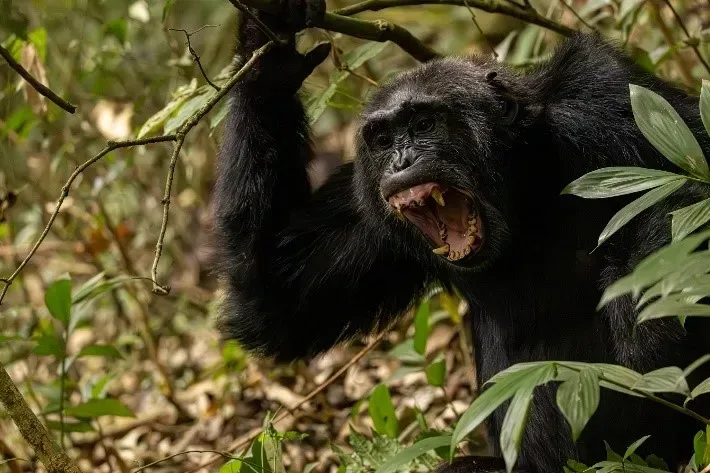
What followed has since been described by researchers as a chimpanzee civil war: coordinated patrols, targeted attacks, and deaths within a population that once lived together. It is rare, disturbing, difficult to study, and still not fully understood. For travelers planning a chimpanzee trekking experience in Uganda, this raises real questions: what's actually happening in Kibale, does it affect what you'll experience, and what does it reveal about one of our closest living relatives?
Quick Answer: What Is the Chimpanzee War in Kibale?
- A single large chimpanzee community in Kibale split into two groups around 2015
- One faction, known as the western group, has carried out coordinated attacks on the central group
- Several adult chimpanzees and infants have been killed or displaced over time
- Researchers point to multiple contributing factors, not one single cause
- The situation is rare, but within the natural range of chimpanzee behavior
The Ngogo Chimpanzees and How the Conflict Began
The Ngogo chimpanzees are not just any chimpanzee group. Studied for decades under the Ngogo Chimpanzee Project, they are one of the most documented chimp communities in the world. At their peak, they numbered close to 200 individuals, unusually large for a chimpanzee community and important for understanding how large primate societies function.
For many years the group appeared stable: hierarchies, alliances, competition, but nothing suggesting a full-scale division. According to Dr. Jacob Nerey, a researcher involved with the project, the first signs of change appeared around 2015: individuals who once spent time together began to separate, and the cohesion holding the group together started to weaken.
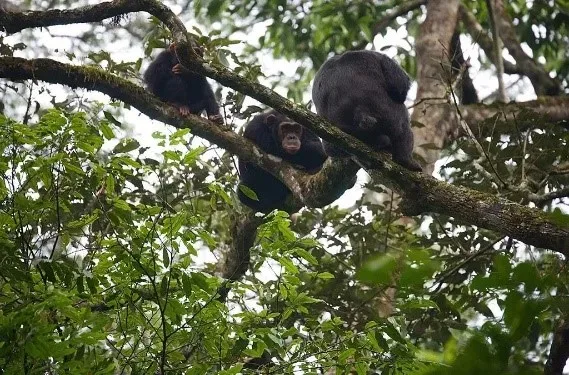
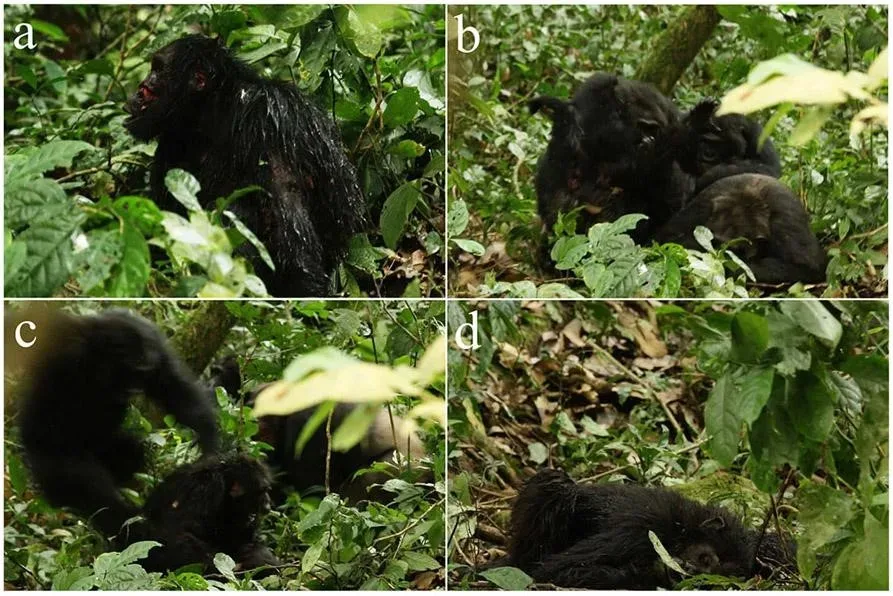
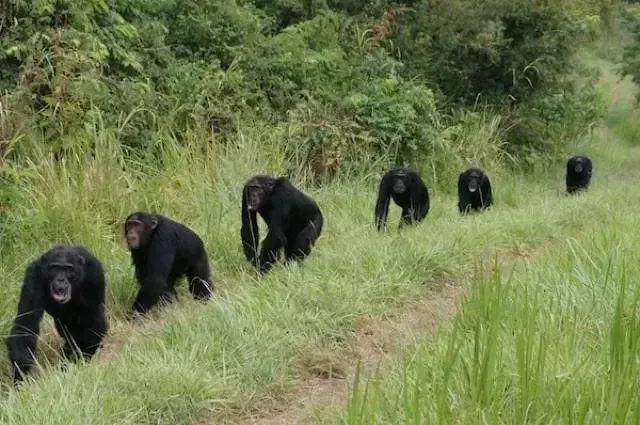
Over time the community split into a western group and a central group, and the division did not remain peaceful. The western group began conducting patrols along territorial edges, deliberate and coordinated. When they encounter a chimp from the other group alone or outnumbered, they attack. This pattern has repeated over the years, leading to deaths and the gradual displacement of the central group within the forest.
What Researchers Have Observed in Kibale National Park
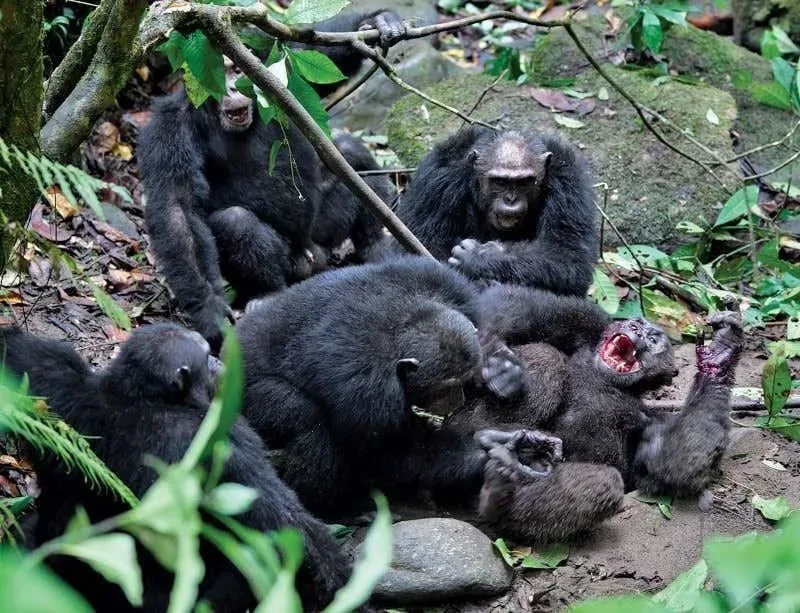
The most striking aspect of this conflict is how organized it is. Researchers have observed patrols carried out by groups of chimpanzees, primarily adult males, moving quietly through the forest, often in single file, deliberate and focused. When these patrol groups encounter a member of the opposing faction alone or outnumbered, they attack.
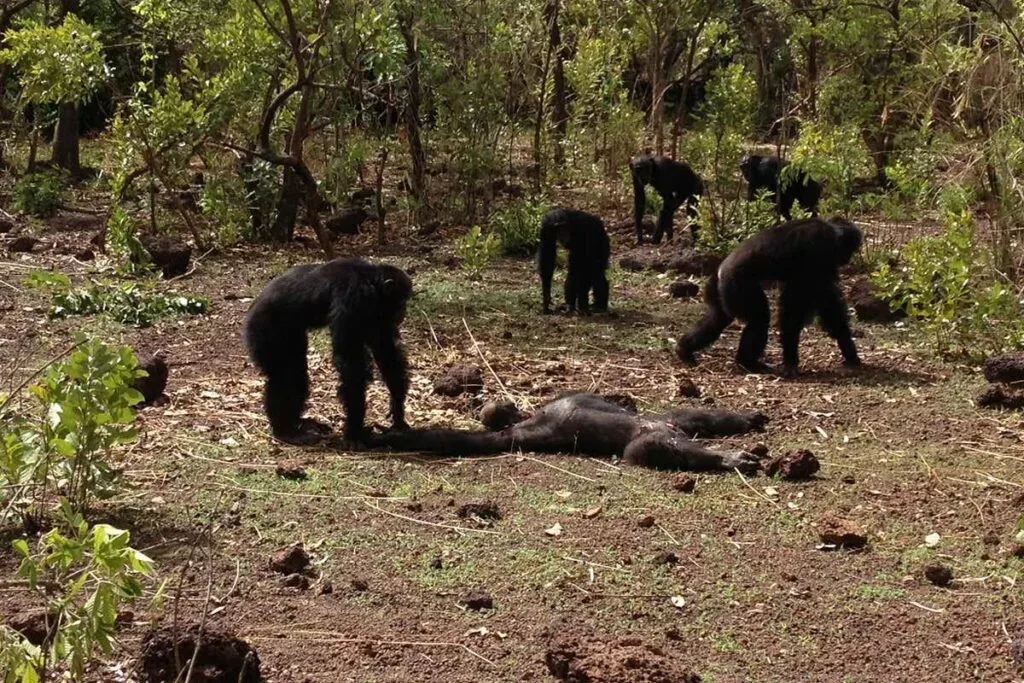
Dr. Jacob Nerey has described this as largely one-sided, with the western group responsible for the majority of the aggression. Over time, the central group has been pushed further east within the forest, losing access to parts of their original territory. The violence itself can be severe:
- Multiple attackers overwhelming a single individual
- Physical injuries from biting and striking
- Death either during the attack or from injuries afterward
Several chimpanzees have been confirmed dead, including well-known individuals like Basie, a 36-year-old male who had been part of the community for years. What makes this particularly striking is that these are not unrelated groups meeting for the first time. These are chimpanzees that once belonged to the same social network.
Why the Ngogo Chimpanzees Split
There is no single explanation for what triggered the chimpanzee war in Kibale. Researchers point instead to a combination of factors that together created the conditions for conflict.
Loss of key individuals. Older male chimpanzees often play a stabilizing role, maintaining alliances, reducing tension, and connecting different subgroups. According to Dr. Kevin Langergraber, the death of older males may have weakened the social structure that once held the group together.
Leadership changes. Power dynamics are central to chimpanzee societies. New dominant individuals may not share the same relationships as their predecessors, which can destabilize alliances.
Group size pressure. The Ngogo community was unusually large, a sign of a healthy environment with sufficient food, but also a real challenge for maintaining cohesion over time. Researchers note the conflict does not appear to be driven by food scarcity; Kibale remains rich in fruiting trees. The issue is structure, not survival.
Social and reproductive separation. As the groups drifted apart, they also became reproductively isolated from each other, reinforcing the division over time.
Escalating events. One moment that may have intensified tensions involved a chimpanzee known as Pork Pie, killed in 2021, his body found within contested territory.
Researchers emphasize these factors likely worked together rather than independently.
How Chimpanzee Conflict Compares to Human Behavior
It is easy to read this and see only violence, but that would be incomplete. Chimpanzees share a significant portion of their DNA with humans, usually discussed in the context of intelligence, communication and emotion, but it extends to conflict too. From a biological and social perspective, chimpanzees are highly organized animals: they form alliances, compete for status, and defend territory. These dynamics can remain stable for long periods, but they are not immune to disruption.
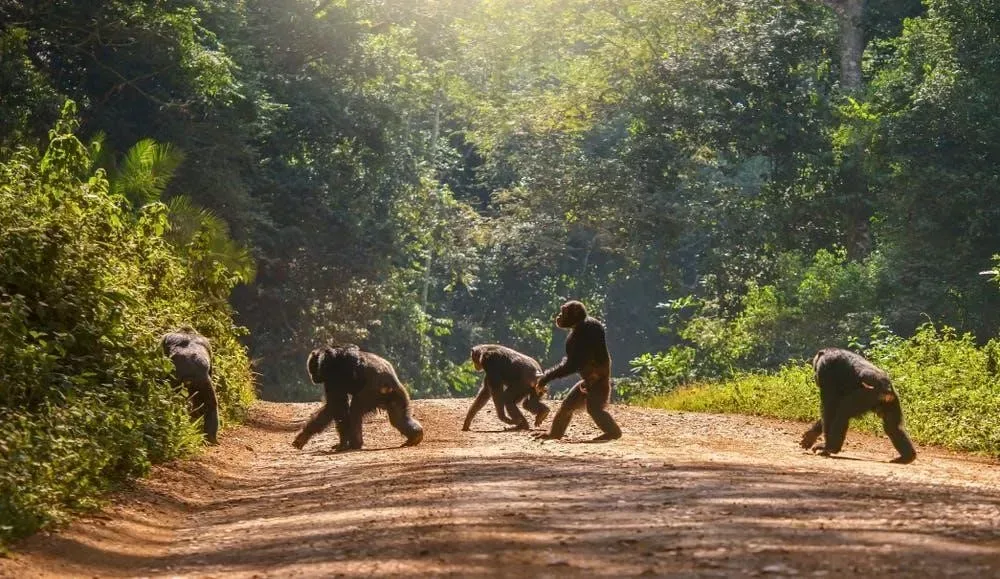
The events in Kibale are rare, but not unprecedented. In the 1970s, Jane Goodall documented a similar pattern of conflict among chimpanzees in Gombe, Tanzania: a split within a community followed by sustained aggression between groups. Based on observations like these, researchers consider intergroup aggression to be within the behavioral range of chimpanzees.
It is important to be precise about what this does and doesn't mean. It does not mean chimpanzees are constantly violent, or that conflict defines their daily behavior. It does mean they are capable of organized aggression, that conflict can emerge under certain social conditions, and that such events are rare but natural within their social systems.
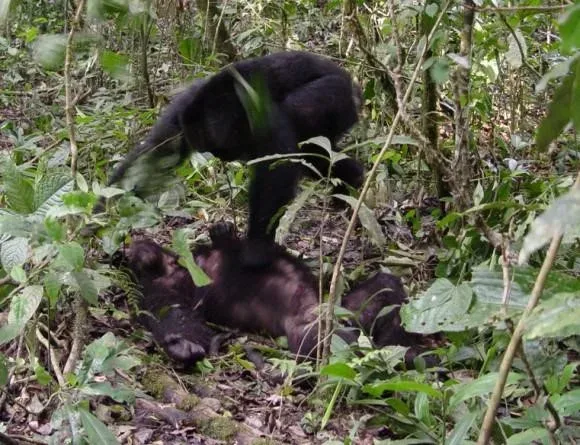
Dr. Jacob Nerey has emphasized that maintaining social relationships is critical not only for chimpanzees, but for humans too. The parallels aren't exact, but they're meaningful. The chimpanzee war is not a moral story or a direct analogy to human society; it's a biological and social phenomenon. It does, however, highlight how complex and structured chimpanzee behavior can be.
What Chimpanzees Are Really Like in the Wild
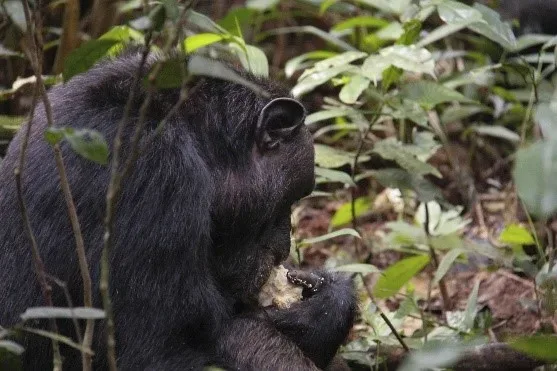
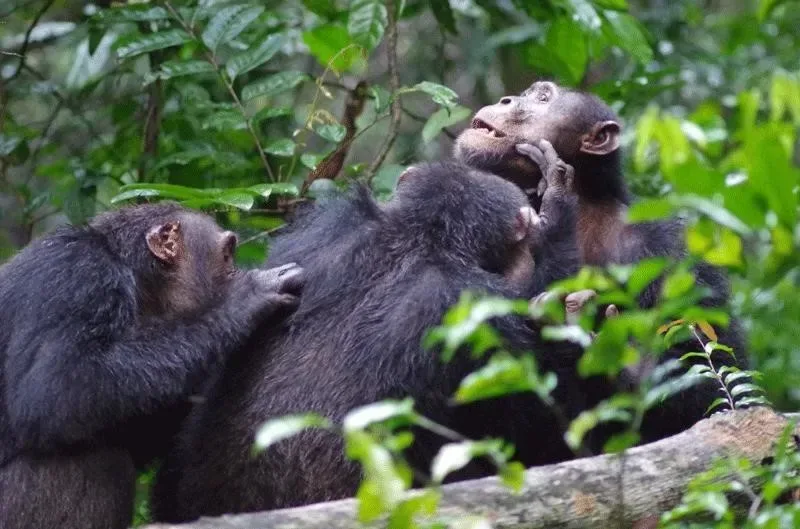
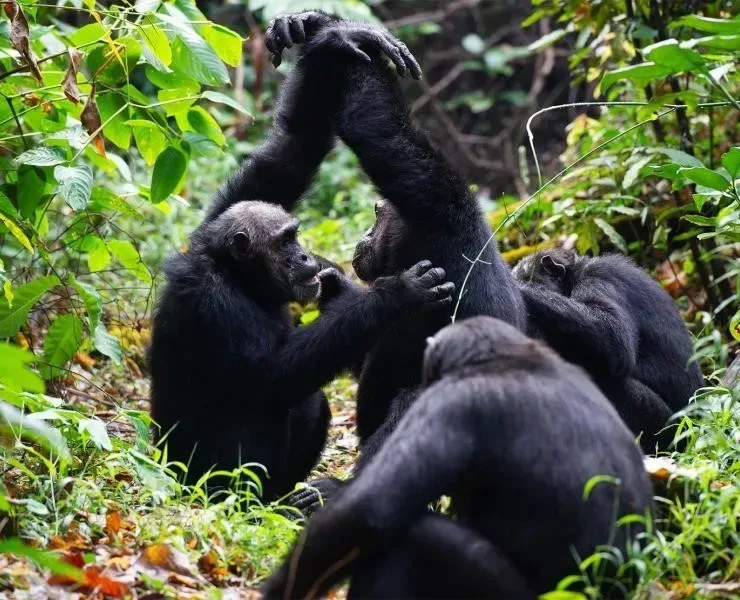
Focusing only on conflict would give a distorted view. Chimpanzees are among the most socially complex animals in the wild, and most of their life is not defined by aggression but by interaction, cooperation, and routine: feeding on fruits and vegetation, grooming each other, resting in the forest canopy, maintaining social bonds.
Grooming, in particular, is one of the most important behaviors. It's not just about hygiene. It's about connection. Through grooming, chimpanzees reinforce relationships and reduce tension within the group. For many visitors, this is the most striking part of seeing chimpanzees in the wild: their expressions, movements, and interactions feel familiar, and watching them up close often creates a sense of recognition that's difficult to describe.
What You Actually Experience During Chimp Trekking in Kibale
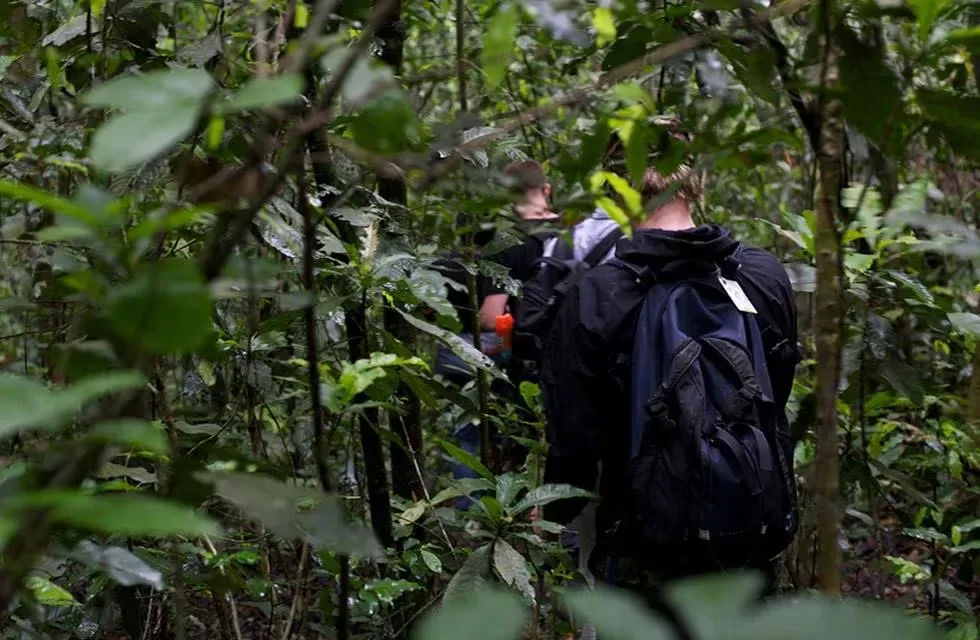
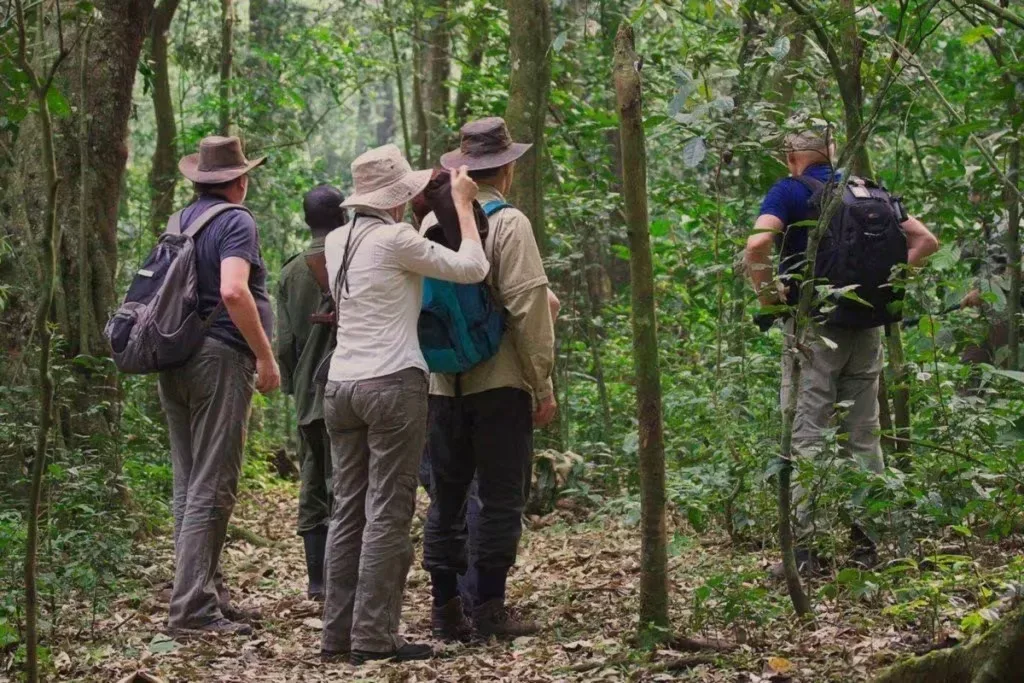
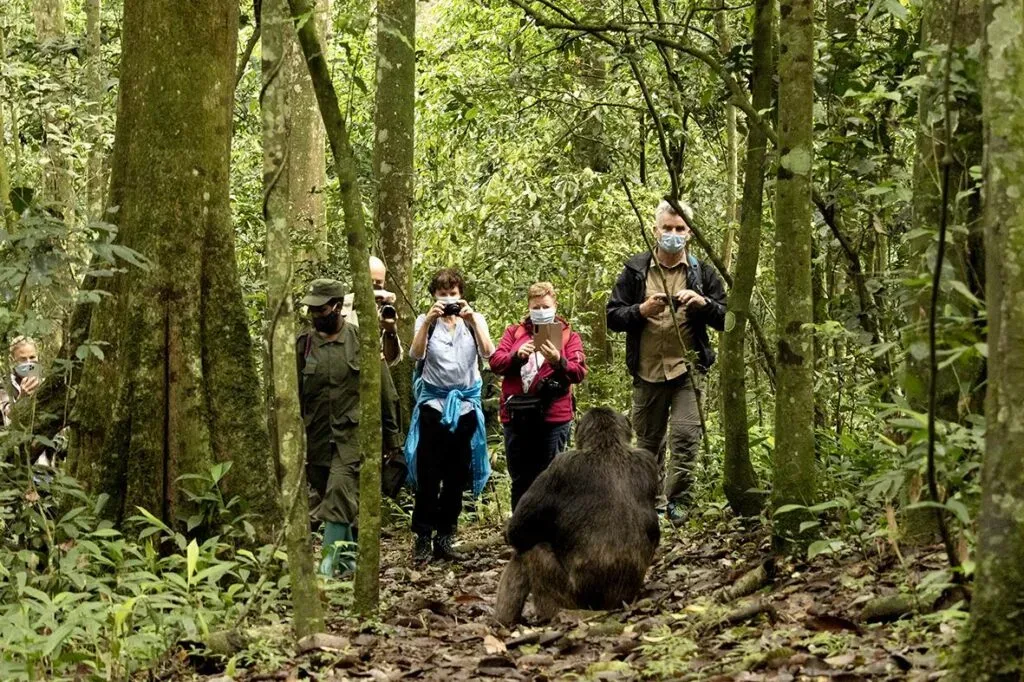
Despite everything happening within the wider Ngogo chimpanzee population, the experience of trekking in Kibale Forest National Park remains safe, and very different. Visitors do not encounter conflict zones or aggressive patrols. Trekking is conducted with trained guides who track habituated chimpanzee groups: individuals gradually accustomed to human presence, monitored closely, with rangers and guides tracking them daily to ensure interactions stay controlled.
The experience usually begins early in the morning with a briefing. From there, you enter the forest and begin tracking. The time it takes to find chimpanzees varies, which adds an element of unpredictability. When you find them, the atmosphere changes. You may see chimpanzees moving quickly through the trees, mothers carrying infants, individuals grooming each other, sudden bursts of vocalization followed by calm.
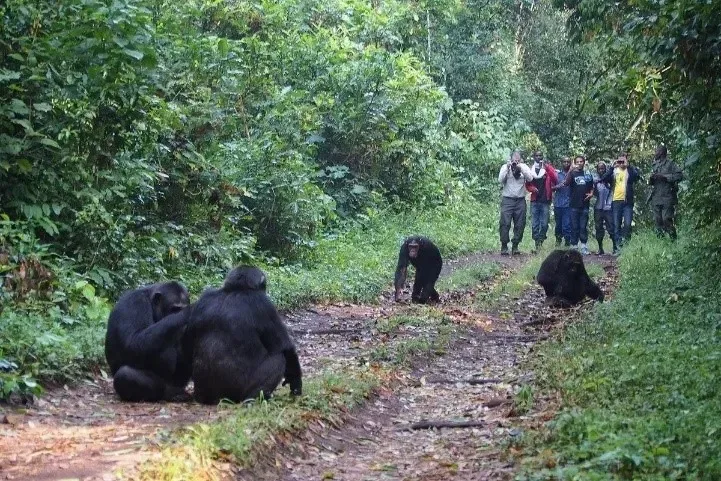
What many visitors notice most is how engaging the experience feels. It isn't passive. You're not observing from a distance; you're in their environment, watching their behavior unfold naturally. Moments often feel shorter than they are. An hour with chimpanzees can pass quickly, leaving a strong impression long after the trek ends.
Where and When to See Chimpanzees in Uganda
The most reliable location for chimpanzee trekking is Kibale Forest National Park, known for its high success rate. Other locations include Budongo Forest in Murchison Falls National Park and Kyambura Gorge in Queen Elizabeth National Park.
Chimp trekking is available year-round, but conditions are generally easier during the dry seasons: June to August, and December to February. During these periods, trails are more accessible and movement through the forest is easier.
Planning Your Safari Step by Step
Getting there. Kibale is approximately five to six hours by road from Kampala. Most travelers include it as part of a broader western Uganda itinerary.
What the trek involves. A pre-trek briefing, guided forest tracking, and one hour with chimpanzees once found.
What to bring. Sturdy hiking shoes, long-sleeved clothing, drinking water, and a camera or binoculars if you have them.
Safari Recommendation
If you want a deeper experience, combining chimpanzees with other primates offers more perspective. A midrange primate safari can include chimpanzee trekking in Kibale, gorilla trekking in Bwindi, and wildlife viewing across western Uganda. Explore our Uganda safaris to find one that fits.
FAQs
Is the chimpanzee war still happening?
Yes. The conflict has been ongoing since around 2015, with continued tension between the two groups.
What was the chimpanzee war in 1974?
It refers to a conflict observed by Jane Goodall in Gombe, Tanzania, where a single chimpanzee community split into two groups: the Kasakela and Kahama communities. Over several years, members of one group systematically attacked and killed individuals from the other. It was the first time scientists documented organized, coalition-based violence among chimpanzees, changing how researchers understood chimp behavior.
How many chimpanzees are left?
An estimated 170,000 to 300,000 chimpanzees remain in the wild across Africa. In Uganda, populations are relatively stable compared to some regions, with habitats like Kibale Forest National Park supporting one of the highest densities. Chimpanzees are still classified as endangered due to habitat loss, disease, and human activity.
What body parts do chimps attack?
During aggressive encounters, chimpanzees often target vulnerable areas: the face, hands and feet, and the genital area, especially in males. These attacks usually happen during group conflicts where multiple chimpanzees overpower one individual. This behavior occurs within chimpanzee social dynamics and is not something tourists encounter during guided trekking.
What animal is closest to humans?
Chimpanzees are the closest living relatives to humans, sharing about 98 percent of our DNA, even more closely related to us than gorillas. This is reflected in their behavior, including communication, tool use, emotional expression, and complex social relationships.
Are chimpanzees dangerous to tourists?
No. Trekking is conducted with habituated groups under ranger guidance. The conflict described here does not involve visitors.
Why are chimpanzees fighting each other?
Researchers suggest a combination of leadership changes, social breakdown, and group size pressures.
Can tourists witness this conflict?
No. These events occur within wild group dynamics and are not part of the trekking experience.
Is chimp trekking safe in Uganda?
Yes. It is well regulated and conducted by trained guides.
What makes chimpanzees different from gorillas?
Chimpanzees are more active and vocal, while gorillas tend to be calmer and more stationary during encounters.
What is the best place to see chimpanzees in Uganda?
Kibale Forest National Park offers the highest success rate.
Final Thought
The story unfolding in Kibale is complex. It shows a side of chimpanzees that is rarely discussed, yet deeply important for understanding them fully. At the same time, stepping into the forest and observing them in their daily lives remains one of the most grounding wildlife experiences in Uganda. Both realities exist together, and seeing that balance is part of what makes the experience meaningful.
If you want to explore Kibale and beyond, start planning your safari around what matters most to you.