
Uganda Wildlife
Impala (Aepyceros melampus)
- Best Months
- Jan, Feb, Jun, Jul, Aug, Sep, Dec
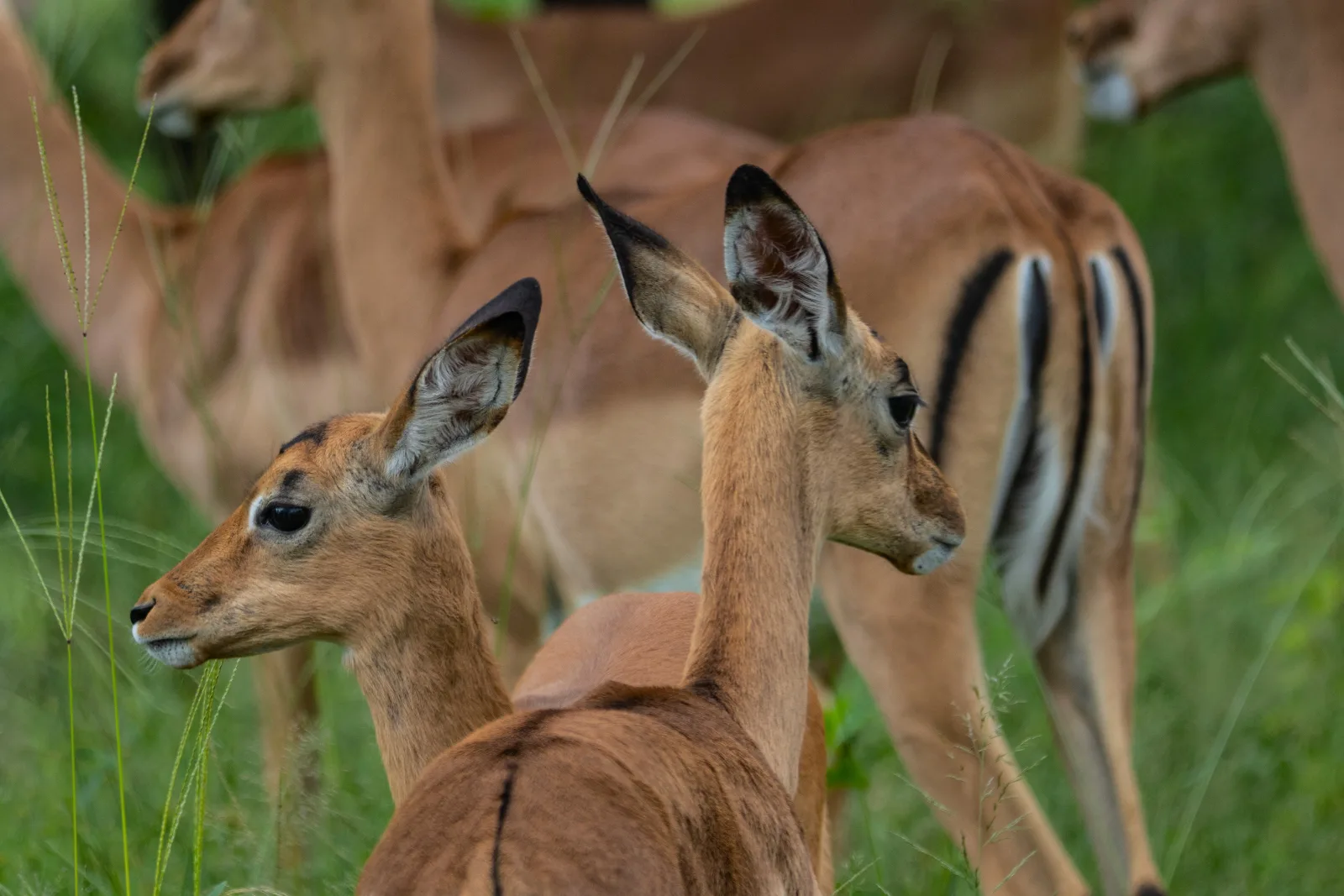
Sporting a two-toned reddish-brown coat with a stark white underbelly, the impala features diagnostic black markings along its tail, ear tips, and thighs. Mature males bear lyre-shaped horns measuring up to 90 centimeters, while females remain completely hornless.
When alarmed, an entire herd can explode into a series of high, scattered leaps meant to confuse a predator about which animal to chase. They possess the capacity to leap up to 3 meters high and 10 meters long to evade predators.
Kampala, Uganda's capital, derives its name from these animals; British colonial administrators referred to the surrounding terrain as the "Hill of the Impala" (Akasozi k'Empeewo in Luganda).
Last updated October 23, 2026
· Written by Enoch, Huko Safaris
5.0average traveler rating
Local expert: Enoch




Best Months to See Impala
From our team
Impala
In Uganda, wild populations are historically localized to a single primary destination: Lake Mburo National Park. For the best encounters, take the Zebra Track. Because Lake Mburo contains no elephants, it is safe to do a guided walking safari or cycling tour, allowing you to approach massive breeding herds on foot. You can also spot them inside the Ziwa Rhino Sanctuary and within the Pian Upe Game Reserve, where the Uganda Wildlife Authority executed a successful translocation project.
— Enoch, Huko Safaris